Working hour: Monday – Friday/8AM – 5PM
|Email: contact@mcac.vn
|Hotline: (+84) 935 925 068 - 0236 3656799
| Language:



Điện thoại: (+84) 935 925 068
Language:

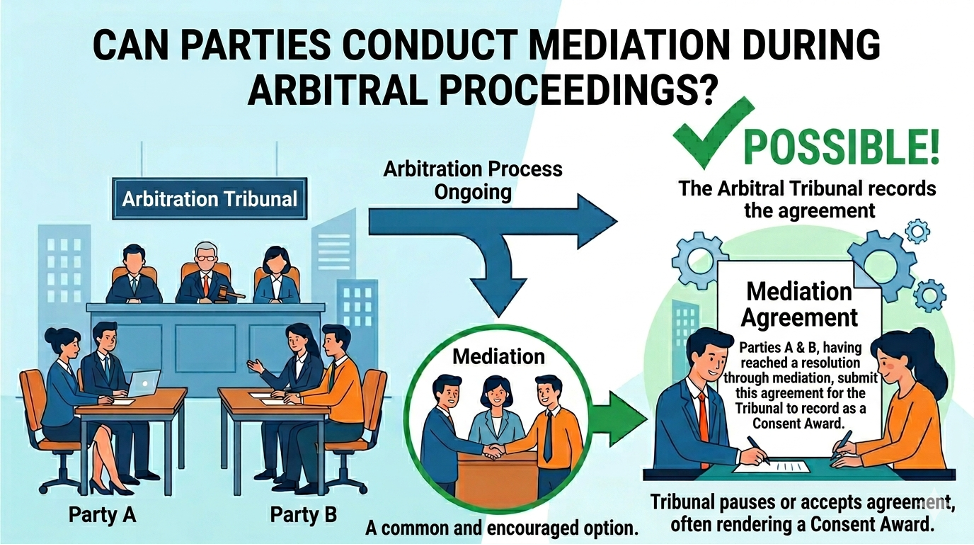
CAN PARTIES CONDUCT MEDIATION DURING ARBITRAL PROCEEDINGS?
30/03/2026


In commercial activities, arbitration is a dispute resolution mechanism whereby a binding award is rendered by an Arbitral Tribunal. In addition, during the arbitral proceedings, based on legal provisions and at the request of the parties, the Arbitral Tribunal may assist the parties in reaching an amicable settlement through negotiation or mediation. This reflects the flexibility of arbitration as well as respect for the parties’ autonomy.
Pursuant to the Law on Commercial Arbitration 2010 (“LCA”) and the Arbitration Rules of the Central Vietnam Commercial Arbitration Center (MCAC), the parties are fully entitled to conduct mediation throughout the dispute resolution process, prior to the issuance of the arbitral award by the Arbitral Tribunal.
Specifically, Clause 1, Article 58 of the LCA and Article 29 of the MCAC Arbitration Rules provide that:
“At the request of the parties, the Arbitral Tribunal shall conduct mediation to enable the parties to reach an agreement on the settlement of the dispute…”
1. Principles and Timing of Mediation
In arbitral proceedings, mediation is based on the principles of voluntariness, good faith, and equality between the parties. The Arbitral Tribunal does not impose any outcome but only plays a supportive role upon request. This is in line with Article 9 of the LCA, which provides:
“During arbitral proceedings, the parties have the right to freely negotiate and agree on the settlement of the dispute or request the Arbitral Tribunal to conduct mediation to facilitate such agreement.”
In practice at the Central Vietnam Commercial Arbitration Center, Arbitral Tribunals often encourage parties to negotiate and mediate from the early stages and throughout the proceedings.
Mediation may take place:
• At the hearing when the Arbitral Tribunal consults the parties;
• During the proceedings when the parties recognize the possibility of reaching a settlement; or
• At any time prior to the issuance of the arbitral award.
Thus, the law does not restrict the timing of mediation, provided that it occurs before the arbitral award is rendered.
2. Conditions for Conducting Mediation
Under Article 58 of the LCA, mediation may only be conducted with the mutual consent of the disputing parties.
Mediation may arise in the following circumstances:
• The parties voluntarily propose and conduct mediation;
• One party proposes mediation and the other agrees;
• The parties request the Arbitral Tribunal to assist in mediation during the proceedings.
Accordingly, the core element for mediation is the parties’ voluntary will, which is consistent with the consensual nature of commercial arbitration.
3. Methods of Conducting Mediation
Arbitration law does not impose rigid requirements on the form of mediation, thereby allowing flexibility for the parties to choose appropriate methods. In practice at MCAC, mediation may be conducted as follows:
• The Arbitral Tribunal, upon request of the parties, facilitates the mediation process by clarifying the issues in dispute and the rights and obligations of the parties, thereby enabling them to reach a settlement;
• The parties independently communicate and negotiate with each other during the proceedings to reach a settlement.
4. Results of Mediation and Legal Effect
4.1 Successful Mediation
Pursuant to Clause 2, Article 58 of the LCA and Article 29 of the MCAC Arbitration Rules:
“If the parties reach an agreement on the settlement of the dispute, the Arbitral Tribunal shall prepare a record of successful mediation signed by the parties and certified by the arbitrators. The Arbitral Tribunal shall issue a decision recognizing the parties’ agreement. Such decision is final and has the same legal effect as an arbitral award.”
Accordingly:
• The Arbitral Tribunal prepares a record of successful mediation signed by the parties and certified by the arbitrators;
• The Arbitral Tribunal issues a decision recognizing the parties’ agreement;
• Such decision has the same legal effect as an arbitral award, is binding, and enforceable upon the parties.
4.2 Unsuccessful Mediation
If the parties fail to reach an agreement, the Arbitral Tribunal shall continue to resolve the dispute in accordance with arbitral procedures.
Unsuccessful mediation does not affect the procedural rights and obligations of the parties.
Conclusion
Mediation is an important mechanism encouraged by law in the process of resolving disputes through arbitration. Allowing parties to freely negotiate and reach a settlement through mediation not only aligns with the principle of party autonomy under the Law on Commercial Arbitration 2010, but also enhances the efficiency of dispute resolution, ensures a balance of interests, and helps maintain stable commercial relationships between the parties.
The article above has analyzed in detail is "Can parties conduct mediation during arbitral proceedings?". For more detailed information or legal assistance, please contact the MCAC Secretariat:
- Hotline: 0935 925 068 - 0236 3656799
- Email: contact@mcac.vn
- Read more: Procedures for resolution of disputes by arbitration at the middle commercial arbitration center (mcac)
Related news
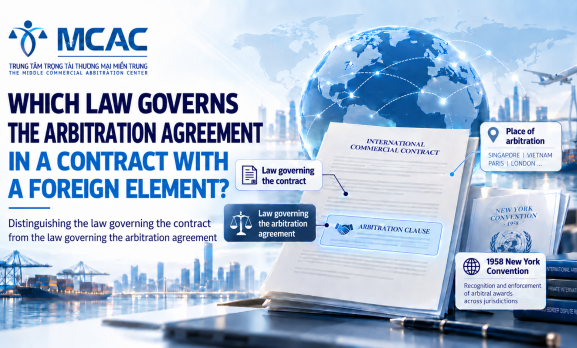
WHICH LAW GOVERNS AN ARBITRATION AGREEMENT IN A CONTRACT WITH FOREIGN ELEMENTS?
In international commercial transactions, parties often agree on the law governing their contract and on arbitration as the method of dispute resolution. However, does the law governing the contract automatically govern the arbitration agreement? If the parties have not agreed on the applicable law, which country's law is used to determine the validity of the arbitration agreement?
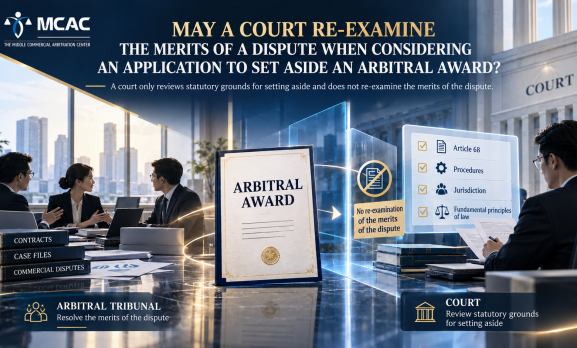
MAY A COURT RE-EXAMINE THE MERITS OF A DISPUTE WHEN CONSIDERING AN APPLICATION TO SET ASIDE AN ARBITRAL AWARD?
When considering an application to set aside an arbitral award, is the Court entitled to reassess evidence, reconsider the parties' rights and obligations, or alter the findings and decisions made by the Arbitral Tribunal?