Working hour: Monday – Friday/8AM – 5PM
|Email: contact@mcac.vn
|Hotline: (+84) 935 925 068 - 0236 3656799
| Language:



Điện thoại: (+84) 935 925 068
Language:

News


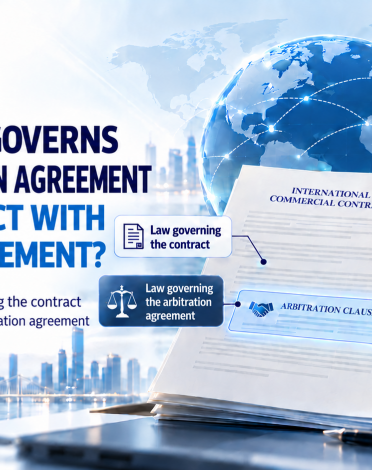
WHICH LAW GOVERNS AN ARBITRATION AGREEMENT IN A CONTRACT WITH FOREIGN ELEMENTS?
In international commercial transactions, parties often agree on the law governing their contract and on arbitration as the method of dispute resolution. However, does the law governing the contract automatically govern the arbitration agreement? If the parties have not agreed on the applicable law, which country's law is used to determine the validity of the arbitration agreement?
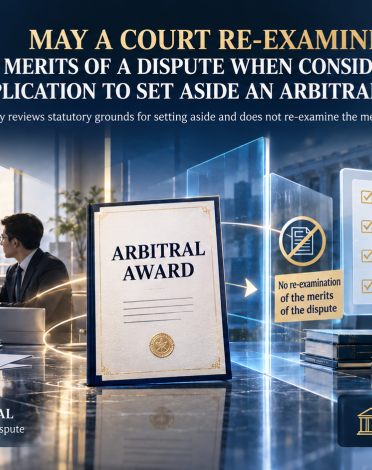
MAY A COURT RE-EXAMINE THE MERITS OF A DISPUTE WHEN CONSIDERING AN APPLICATION TO SET ASIDE AN ARBITRAL AWARD?
When considering an application to set aside an arbitral award, is the Court entitled to reassess evidence, reconsider the parties' rights and obligations, or alter the findings and decisions made by the Arbitral Tribunal?
AFTER FILING A LAWSUIT IN COURT, CAN A BUSINESS STILL REFER THE DISPUTE TO ARBITRATION?
In practice, a business may file a lawsuit in court only to discover subsequently that the contract between the parties contains an arbitration agreement. In other cases, the original contract contains no arbitration clause, but after a dispute arises, the parties agree to resolve it through arbitration.
Does filing a lawsuit in court preclude the possibility of resolving the dispute through arbitration? The answer requires consideration of when the arbitration agreement was concluded, its validity and scope, and whether the court has formally accepted the case or is still at the stage of receiving and reviewing the statement of claim.
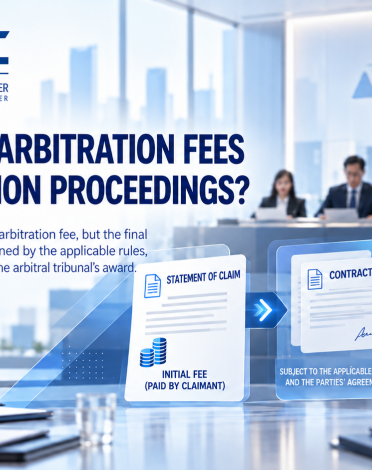
WHO BEARS ARBITRATION FEES IN ARBITRAL PROCEEDINGS?
Who is required to pay arbitration fees initially?
Pursuant to Article 35(1) of the Arbitration Rules of the Middle Commercial Arbitration Center (MCAC), when filing a Statement of Claim, the Claimant must pay in full the arbitration costs of the Center specified in Article 34(1) and (2) of the Rules, in accordance with the Schedule of Arbitration Fees in effect at the time of filing, unless the parties agree otherwise.
ARBITRATION CLAUSES IN ELECTRONICALLY SIGNED CONTRACTS: ARE ARBITRATION AGREEMENTS VALID?
With the development of electronic transactions, commercial contracts concluded using electronic signatures, digital signatures, email or other electronic means have become increasingly common. Such contracts may contain an agreement between the parties to resolve disputes arising out of or in connection with the contract by arbitration.
The question is whether, where a contract is concluded electronically rather than signed in ink on paper, the arbitration clause contained in that contract satisfies the formal requirements and has legal effect.
INSTITUTIONAL OR AD HOC ARBITRATION: WHAT SHOULD BUSINESSES CONSIDER WHEN CHOOSING?
How does the law define institutional and ad hoc arbitration?
Under Clause 6, Article 3 of the LCA, institutional arbitration is a form of dispute resolution conducted at an arbitration center in accordance with the LCA and the arbitration rules of that center.