Working hour: Monday – Friday/8AM – 5PM
|Email: contact@mcac.vn
|Hotline: (+84) 935 925 068 - 0236 3656799
| Language:


Điện thoại: (+84) 935 925 068
Language:

News


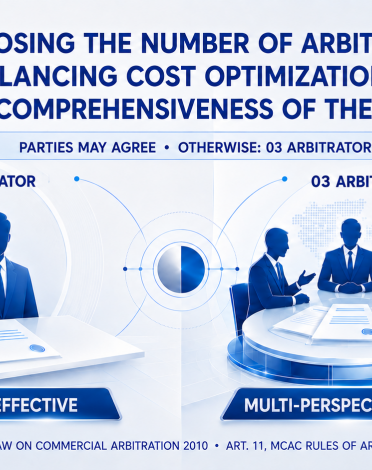
SELECTING THE NUMBER OF ARBITRATORS: BALANCING COST OPTIMISATION AND THE COMPREHENSIVENESS OF THE AWARD
Commercial arbitration respects the parties’ freedom of agreement. In particular, selecting an arbitral tribunal composed of one Arbitrator or three Arbitrators directly affects two core objectives: the speed/cost of the proceedings and the quality/impartiality of the award.
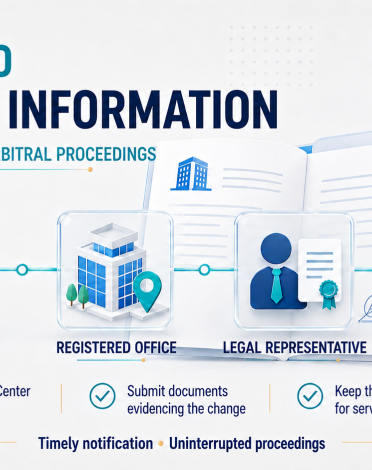
CHANGES TO CORPORATE INFORMATION – KEY CONSIDERATIONS IN COMMERCIAL ARBITRATION PROCEEDINGS
Changes to an enterprise’s fundamental information, such as its name, registered office address, or legal representative, during the resolution of a dispute by arbitration may affect the validity of the service and receipt of procedural documents.
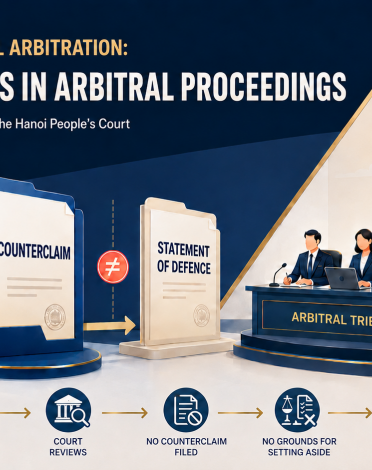
LEGAL COMMENTARY: COUNTERCLAIMS IN ARBITRAL PROCEEDINGS – DECISION NO. 07/2017/QĐ-PQTT OF THE PEOPLE'S COURT OF HANOI ON THE REFUSAL TO SET ASIDE AN ARBITRAL AWARD
In arbitral proceedings, the Respondent is entitled not only to submit a Statement of Defence in response to the Claimant's claims but also to bring counterclaims against the Claimant on matters related to the dispute. However, an independent claim by the Respondent may be considered and resolved by the Arbitral Tribunal only if it is submitted in the proper form and in accordance with the applicable procedures for counterclaims.
Decision No. 07/2017/QĐ-PQTT of the People's Court of Hanoi provides a noteworthy practical example of the consequences arising when the Respondent raises a claim for damages in its Statement of Defence without submitting a separate Counterclaim.
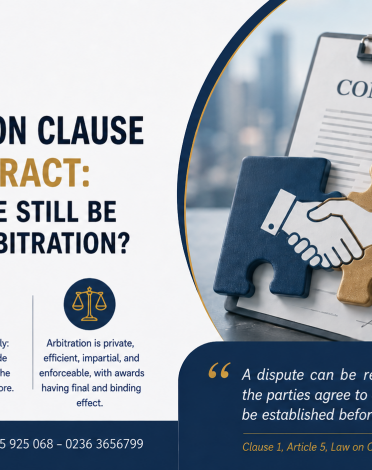
NO ARBITRATION CLAUSE IN THE CONTRACT: CAN THE DISPUTE STILL BE RESOLVED BY ARBITRATION?
Under Vietnamese law, the inclusion of an arbitration clause in a contract is not a prerequisite for establishing arbitral jurisdiction. Rather, arbitral jurisdiction is determined based on the existence of a valid arbitration agreement between the parties. Such an agreement may be concluded either before or after a dispute arises.
Accordingly, the absence of an arbitration clause in a contract does not necessarily mean that the dispute must be resolved by a court. If the parties subsequently enter into a valid arbitration agreement in accordance with the law, the dispute may still fall within the jurisdiction of commercial arbitration.
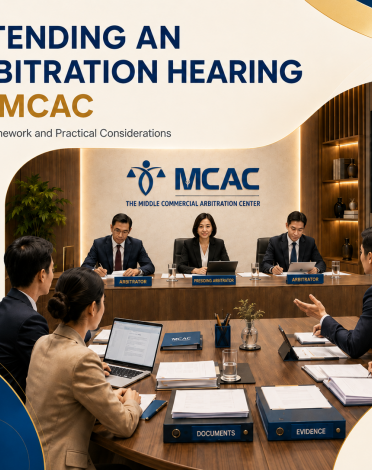
ATTENDING AN ARBITRATION HEARING AT MCAC: LEGAL FRAMEWORK AND PRACTICAL CONSIDERATIONS
The arbitral hearing is a crucial stage in the arbitration proceedings, providing the parties with an opportunity to directly present their arguments, clarify their claims, counterclaims, statements of defense, and explain the documents and evidence before the Arbitral Tribunal. To participate effectively and minimize legal risks, parties should pay attention to the following key issues.