Working hour: Monday – Friday/8AM – 5PM
|Email: contact@mcac.vn
|Hotline: (+84) 935 925 068 - 0236 3656799
| Language:



Điện thoại: (+84) 935 925 068
Language:

WHY SHOULD COMMERCIAL ARBITRATION BE USED IN THE RESOLUTION OF CONSTRUCTION DISPUTES?
16/04/2026


In the context of increasingly complex and large-scale construction investment activities, involving sophisticated technical requirements and multiple stakeholders, disputes in the construction sector have become both common and, to a certain extent, inevitable. Such disputes not only affect the rights and interests of the parties but also have a direct impact on project timelines, costs, and overall efficiency.
Accordingly, the selection of an appropriate dispute resolution mechanism is of particular importance. Among the available mechanisms, commercial arbitration is increasingly recognised as an optimal method for resolving disputes, especially in construction projects of significant value or those involving international elements.
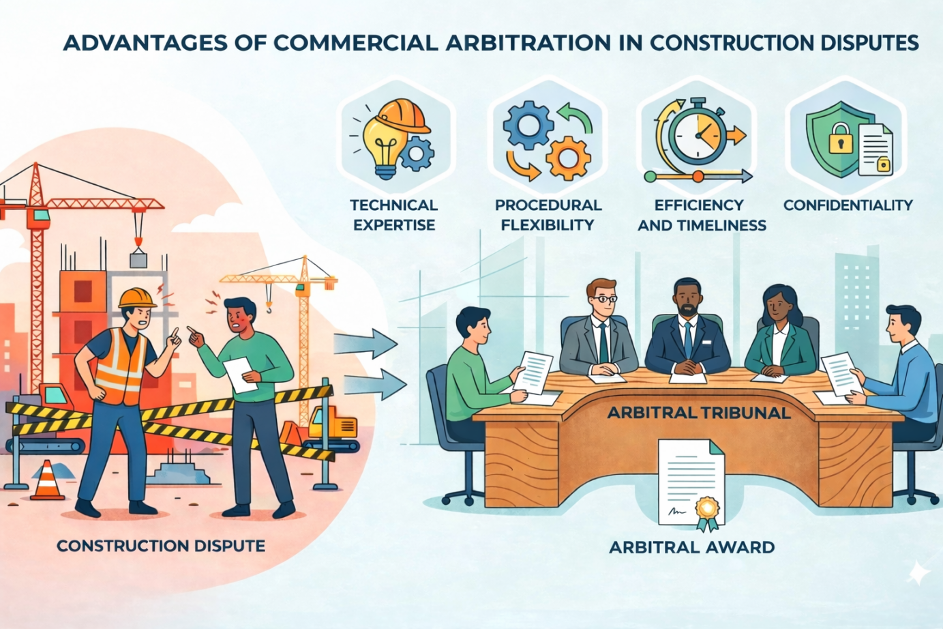
1. What Are Construction Disputes?
Construction disputes refer to disagreements or conflicts arising among participants in construction activities in relation to the performance of contractual obligations or compliance with applicable laws. Such disputes are typically characterised by a high degree of technical complexity, substantial value, the involvement of multiple parties, and often protracted resolution periods, thereby requiring an appropriate and effective dispute resolution mechanism.
(i) Parties to Construction Disputes
- Employers (project owners);
- Main contractors and subcontractors;
- Design consultants and supervision consultants;
- Other relevant parties involved in the implementation of the project.
(ii) Common Types of Construction Disputes
- Disputes relating to payments and final accounts;
- Disputes concerning construction progress and contractual performance;
- Disputes regarding quality of works and defects liability;
- Disputes arising from design changes and variations;
- Disputes concerning termination of contracts and claims for damages;
- Disputes relating to standard form contract provisions (such as FIDIC).
2. Dispute Resolution Methods in Construction
The Vietnamese legal framework provides for a relatively comprehensive range of dispute resolution methods in the construction sector. In particular, pursuant to Article 146 of the Law on Construction 2014 (which will cease to be effective as of 1 July 2026) and Article 86 of the Law on Construction 2025 (effective from 1 July 2026), construction disputes may be resolved through negotiation, mediation, arbitration, or litigation before the courts.
The Law on Construction 2025 further introduces provisions recognising the application of internationally accepted dispute resolution mechanisms. In respect of public investment projects and public-private partnership (PPP) projects, where arbitration is chosen, priority is given to domestic arbitral institutions. The application of international dispute resolution models must either be required under an international treaty or be approved by the competent investment decision-maker and agreed upon by the parties in the construction contract. Any dispute resolution costs incurred by the employer (if any) may be included in the total investment cost of the project.
On this basis, the principal dispute resolution methods may be outlined as follows:
(i) Negotiation
Negotiation is a method whereby the parties directly engage with one another to resolve the dispute without the involvement of a third party. It is flexible and cost-efficient, but largely dependent on the parties’ good faith.
(ii) Mediation
Mediation involves the participation of a neutral third party who assists the parties in reaching a settlement. This method emphasises voluntariness and confidentiality; however, the outcome is not binding unless it is formalised in a legally enforceable agreement.
(iii) International Dispute Resolution Mechanisms
These mechanisms include the Dispute Adjudication Board (DAB/DAAB), Dispute Review Board (DRB), and Combined Dispute Board (CDB), among others. They are specifically designed for the construction sector and are particularly prevalent in contracts based on standard forms such as FIDIC.
Among these, the DAB/DAAB is the most widely used mechanism. It operates throughout the performance of the contract and is empowered to issue decisions that are binding but not final. This enables disputes to be addressed promptly, minimises disruption to the project, and ensures continuity in construction activities.
(iv) Commercial Arbitration
Commercial arbitration is an alternative dispute resolution mechanism conducted outside the court system and based on the agreement of the parties. The current legal framework, particularly in relation to public investment and PPP projects, encourages the use of domestic arbitral institutions while allowing for flexibility in line with international practices.
(v) Court Litigation
Court litigation refers to dispute resolution by state courts in accordance with civil procedure law. Court judgments are enforceable through state authority; however, the process is often more time-consuming and less flexible.
3. Why Is Commercial Arbitration Preferred in Construction Disputes?
Among the aforementioned methods, commercial arbitration has emerged as a particularly suitable mechanism for resolving construction disputes, as reflected in the following advantages:
(i) Technical Expertise: The parties may appoint arbitrators with specialised expertise in construction, engineering, or international contracts, thereby enhancing the quality and reliability of the dispute resolution process.
(ii) Procedural Flexibility: The parties are free to agree on procedural rules, the seat of arbitration, the language of the proceedings, and the applicable law, allowing the process to be tailored to the complexity of construction projects.
(iii) Confidentiality: Arbitral proceedings are conducted on a private basis, ensuring that information relating to the dispute remains confidential—an important consideration for projects involving technical know-how or commercially sensitive information.
(iv) Efficiency and Timeliness: Arbitration proceedings are generally resolved more expeditiously than court litigation, thereby minimising disruption to project timelines.
(v) Finality of the Award: Arbitral awards are final and binding and are not subject to appeal, enabling disputes to be conclusively resolved.
(vi) International Enforceability: Arbitral awards may be recognised and enforced in multiple jurisdictions under international conventions, providing a significant advantage in disputes involving foreign elements.
(vii) Alignment with International Practice: In international construction contracts, particularly those based on standard forms such as FIDIC, arbitration is commonly designated as the final method of dispute resolution, reflecting its widespread acceptance and standardisation globally.
Conclusion
Construction disputes are inherently complex and require a dispute resolution mechanism that combines technical expertise with efficiency and flexibility. In this context, commercial arbitration demonstrates clear advantages over more traditional methods.
Accordingly, parties engaged in construction activities may consider selecting arbitration as their preferred dispute resolution mechanism and incorporating an arbitration clause at the contract formation stage. Such an approach not only mitigates legal risks but also ensures alignment with international practices and the practical demands of modern construction projects.
The article above has analyzed in detail is "Why should commercial arbitration be used in the resolution of construction disputes?". For more detailed information or legal assistance, please contact the MCAC Secretariat:
- Hotline: 0935 925 068 - 0236 3656799
- Email: contact@mcac.vn
- Read more: Matters relating to the arbitration agreement considered by the arbitral tribunal
Related news
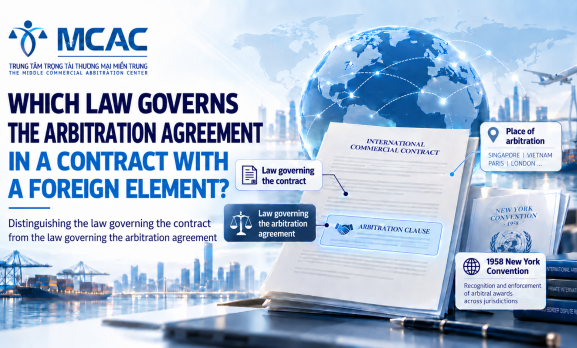
WHICH LAW GOVERNS AN ARBITRATION AGREEMENT IN A CONTRACT WITH FOREIGN ELEMENTS?
In international commercial transactions, parties often agree on the law governing their contract and on arbitration as the method of dispute resolution. However, does the law governing the contract automatically govern the arbitration agreement? If the parties have not agreed on the applicable law, which country's law is used to determine the validity of the arbitration agreement?
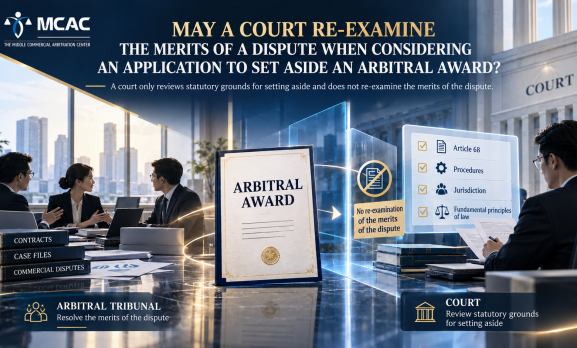
MAY A COURT RE-EXAMINE THE MERITS OF A DISPUTE WHEN CONSIDERING AN APPLICATION TO SET ASIDE AN ARBITRAL AWARD?
When considering an application to set aside an arbitral award, is the Court entitled to reassess evidence, reconsider the parties' rights and obligations, or alter the findings and decisions made by the Arbitral Tribunal?