Working hour: Monday – Friday/8AM – 5PM
|Email: contact@mcac.vn
|Hotline: (+84) 935 925 068 - 0236 3656799
| Language:



Điện thoại: (+84) 935 925 068
Language:

DISTINGUISHING APPLICABLE LAW IN COMMERCIAL ARBITRATION: FROM “SUBSTANTIVE LAW” (LEX CAUSAE) TO “PROCEDURAL LAW” (LEX ARBITRI) UNDER VIETNAMESE LAW
14/04/2026


In arbitration, determining the applicable law is not about selecting a single legal system, but rather about the concurrent operation of multiple layers of law. Central to this framework is the distinction between the law governing the substance of the dispute (lex causae) and the law governing arbitral procedure (lex arbitri)—two relatively independent yet closely interconnected pillars in the dispute resolution process.
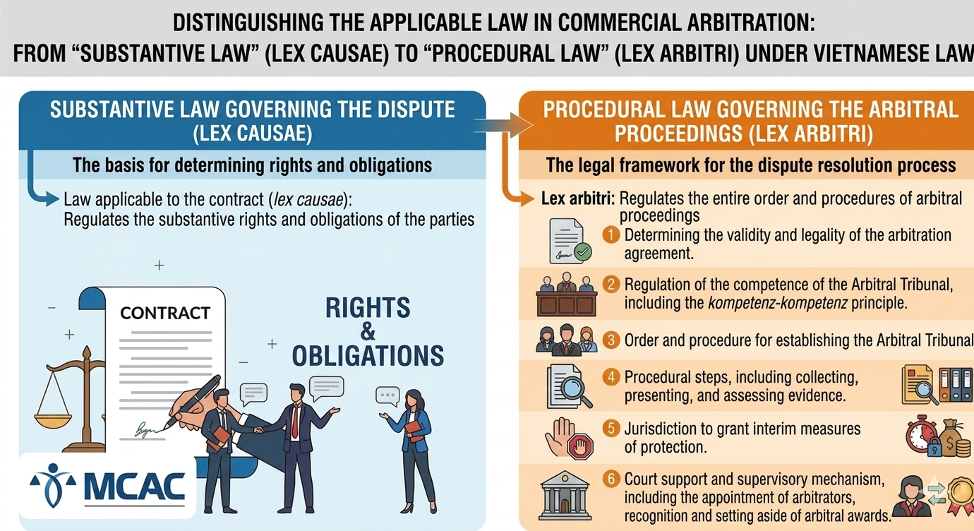
1. Law governing the substance of the dispute (lex causae): Basis for determining rights and obligations
Pursuant to Article 14 of the 2010 Law on Commercial Arbitration, the applicable law for resolving the substance of disputes is determined as follows:
- For disputes without foreign elements, the arbitral tribunal shall apply Vietnamese law;
- For disputes with foreign elements:
- Where the parties have made a choice of law, such law shall prevail;
- In the absence of such agreement, the arbitral tribunal may determine and apply the law it deems most appropriate to the dispute.
- Where neither Vietnamese law nor the chosen law contains relevant provisions, the tribunal may apply international trade usages, provided that such application and its consequences are not contrary to the fundamental principles of Vietnamese law.
Notably, in international arbitration practice, lex causae is not confined to national laws. Parties may choose:
- The law of a specific country;
- International legal principles (soft law);
- International trade usages.
Where Vietnamese law is applied as lex causae, its scope may extend beyond statutory provisions to include case law, equity, and fundamental principles of civil law under the 2015 Civil Code.
Accordingly, lex causae determines the legal nature of the dispute and forms the basis for identifying the parties’ rights, obligations, and resulting legal consequences.
2. Law governing arbitral procedure (lex arbitri): Legal framework of the arbitral process
From both a doctrinal perspective and under Article 19 of the 2010 Law on Commercial Arbitration, lex arbitri refers to the body of legal rules governing arbitral procedure. It is mandatory in nature and extends beyond the parties’ agreement.
Its scope includes:
- Validity and enforceability of the arbitration agreement;
- Jurisdiction of the arbitral tribunal, including the principle of kompetenz-kompetenz;
- Constitution of the arbitral tribunal;
- Procedural conduct, including the taking and assessment of evidence;
- Authority to grant interim measures;
- Court support and supervision, including appointment of arbitrators, recognition and annulment of arbitral awards.
A key feature of lex arbitri is its connection to the seat of arbitration, which is distinct from the venue of hearings.
In essence, lex arbitri answers the question: under which legal system is the arbitration conducted and supervised?
3. Distinction between the law governing the contract, the arbitration agreement, and lex arbitri
In arbitration, multiple legal systems may simultaneously govern different aspects of the legal relationship, including:
- The law governing the contract (lex causae): regulates substantive rights and obligations;
- Lex arbitri: governs the entire arbitral procedure.
These systems do not necessarily coincide and may be determined on different legal bases. This separation reflects the multi-layered and flexible nature of international commercial arbitration, as well as the doctrine of separability between the arbitration agreement and the underlying contract.
Conclusion
Lex causae and lex arbitri perform distinct yet complementary roles in arbitration: the former governs the substance of the dispute, while the latter governs the procedure. Their clear distinction reflects the flexibility of international arbitration while maintaining oversight by the legal system of the arbitral seat.
Therefore, correctly identifying and applying the relevant legal systems is a prerequisite for ensuring the legality and effectiveness of arbitration as a dispute resolution mechanism in the context of global integration.
The article above has analyzed in detail is "Distinguishing applicable law in commercial arbitration: from “substantive law” (lex causae) to “procedural law” (lex arbitri) under vietnamese law". For more detailed information or legal assistance, please contact the MCAC Secretariat:
- Hotline: 0935 925 068 - 0236 3656799
- Email: contact@mcac.vn
- Read more: Matters relating to the arbitration agreement considered by the arbitral tribunal
Related news
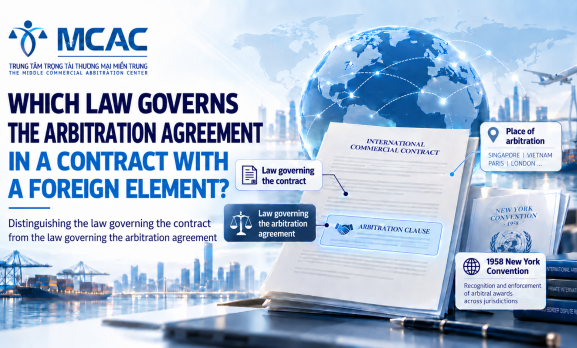
WHICH LAW GOVERNS AN ARBITRATION AGREEMENT IN A CONTRACT WITH FOREIGN ELEMENTS?
In international commercial transactions, parties often agree on the law governing their contract and on arbitration as the method of dispute resolution. However, does the law governing the contract automatically govern the arbitration agreement? If the parties have not agreed on the applicable law, which country's law is used to determine the validity of the arbitration agreement?
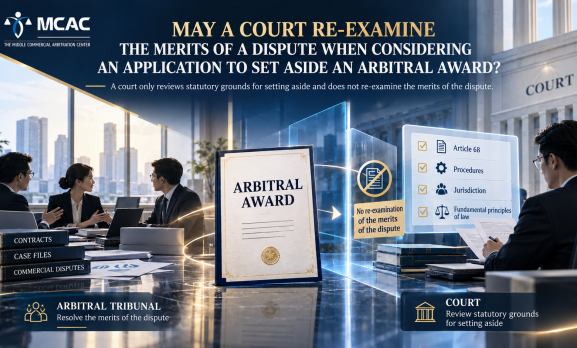
MAY A COURT RE-EXAMINE THE MERITS OF A DISPUTE WHEN CONSIDERING AN APPLICATION TO SET ASIDE AN ARBITRAL AWARD?
When considering an application to set aside an arbitral award, is the Court entitled to reassess evidence, reconsider the parties' rights and obligations, or alter the findings and decisions made by the Arbitral Tribunal?