Working hour: Monday – Friday/8AM – 5PM
|Email: contact@mcac.vn
|Hotline: (+84) 935 925 068 - 0236 3656799
| Language:



Điện thoại: (+84) 935 925 068
Language:

NEGOTIATION AND MEDIATION IN ARBITRAL PROCEEDINGS
10/04/2026


In commercial arbitration proceedings, in addition to the resolution of disputes by way of an arbitral award, arbitration law recognises the possibility for the parties to resolve their disputes through negotiation and mediation. However, it should be clearly understood that these mechanisms do not constitute independent methods of dispute resolution, nor do they represent mandatory procedural steps. Rather, they are supportive mechanisms grounded in the principle of party autonomy within the framework of arbitral proceedings.
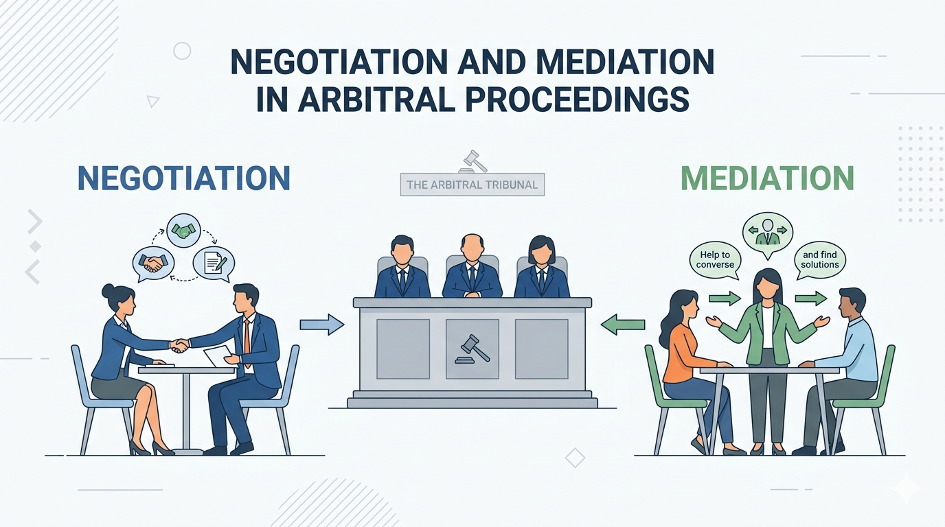
1. Legal Basis and Nature of Negotiation and Mediation in Arbitral Proceedings
The Law on Commercial Arbitration 2010 establishes a legal framework for negotiation and mediation within the course of arbitral proceedings.
Pursuant to Article 9 of the Law on Commercial Arbitration 2010, during arbitral proceedings, the parties are free to negotiate and reach agreement on the resolution of their dispute or to request the arbitral tribunal to conduct mediation in order to facilitate a settlement between them. This provision reflects that the use of such mechanisms is entirely dependent upon the will of the parties.
Further elaborating this principle, Article 38 of the Law on Commercial Arbitration 2010 recognises the parties’ right to continue negotiations from the commencement of arbitral proceedings, including after the case has been accepted for administration. Where the parties reach a settlement, they may request the President of the arbitral institution to issue a decision terminating the proceedings.
With respect to mediation, Article 58 of the Law on Commercial Arbitration provides that the arbitral tribunal shall only conduct mediation upon the request of the parties. Where a settlement is reached, the arbitral tribunal shall record the mediated settlement in writing and issue a decision recognising such agreement.
From the foregoing provisions, three key legal characteristics may be identified:
(i) Negotiation and mediation are not mandatory procedural steps, but rather optional mechanisms available to the parties in arbitral proceedings;
(ii) The Arbitral tribunal performs a supportive role in facilitating and recording the parties’ agreement, without imposing negotiation or mediation upon them;
(iii) Negotiation and mediation do not alter the fundamental nature of arbitration as a binding dispute resolution mechanism based on arbitral awards. Rather, they serve as flexible mechanisms enabling the parties to resolve their dispute prior to the issuance of an arbitral award.
2. Legal Consequences of Successful Negotiation and Mediation
Although not mandatory, successful negotiation and mediation may give rise to significant legal consequences in arbitral proceedings.
In the case of negotiation, where the parties reach an agreement to resolve the dispute, the consequence is the termination of the arbitral proceedings by decision of the President of the arbitral institution.
In the case of mediation, where a settlement is reached, the arbitral tribunal shall record the mediated settlement in writing and issue a decision recognising the parties’ agreement. Such decision is final and binding and has legal effect equivalent to an arbitral award, thereby ensuring its enforceability in practice.
3. Conclusion
From a legal perspective, it may be affirmed that negotiation and mediation in commercial arbitral proceedings are voluntary, flexible, and supportive mechanisms which are encouraged by law but not mandatory.
The recognition of these mechanisms does not alter the fundamental nature of arbitration as a binding dispute resolution method based on arbitral awards; rather, it creates additional space for the parties to proactively seek solutions that align with their respective interests.
Accordingly, a proper understanding and effective use of negotiation and mediation in arbitral proceedings not only assist the parties in saving time and costs but also contribute to maintaining commercial relationships—an element of particular importance in the modern business environment.
The article above has analyzed in detail is "Negotiation and mediation in arbitral proceedings". For more detailed information or legal assistance, please contact the MCAC Secretariat:
- Hotline: 0935 925 068 - 0236 3656799
- Email: contact@mcac.vn
- Read more: Matters relating to the arbitration agreement considered by the arbitral tribunal
Related news
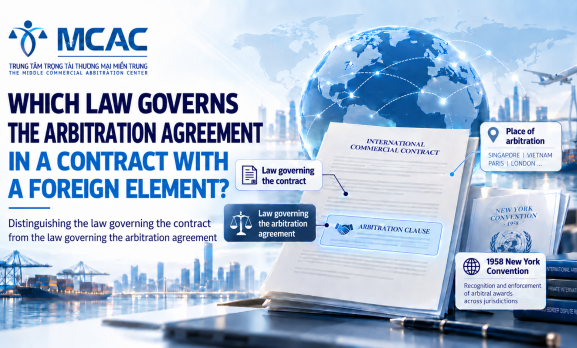
WHICH LAW GOVERNS AN ARBITRATION AGREEMENT IN A CONTRACT WITH FOREIGN ELEMENTS?
In international commercial transactions, parties often agree on the law governing their contract and on arbitration as the method of dispute resolution. However, does the law governing the contract automatically govern the arbitration agreement? If the parties have not agreed on the applicable law, which country's law is used to determine the validity of the arbitration agreement?
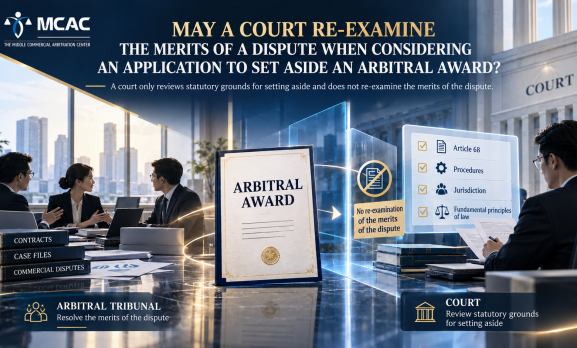
MAY A COURT RE-EXAMINE THE MERITS OF A DISPUTE WHEN CONSIDERING AN APPLICATION TO SET ASIDE AN ARBITRAL AWARD?
When considering an application to set aside an arbitral award, is the Court entitled to reassess evidence, reconsider the parties' rights and obligations, or alter the findings and decisions made by the Arbitral Tribunal?