Working hour: Monday – Friday/8AM – 5PM
|Email: contact@mcac.vn
|Hotline: (+84) 935 925 068 - 0236 3656799
| Language:



Điện thoại: (+84) 935 925 068
Language:

LEGAL FEES IN ARBITRATION PROCEEDINGS: ARE THEY REIMBURSABLE?
05/05/2026


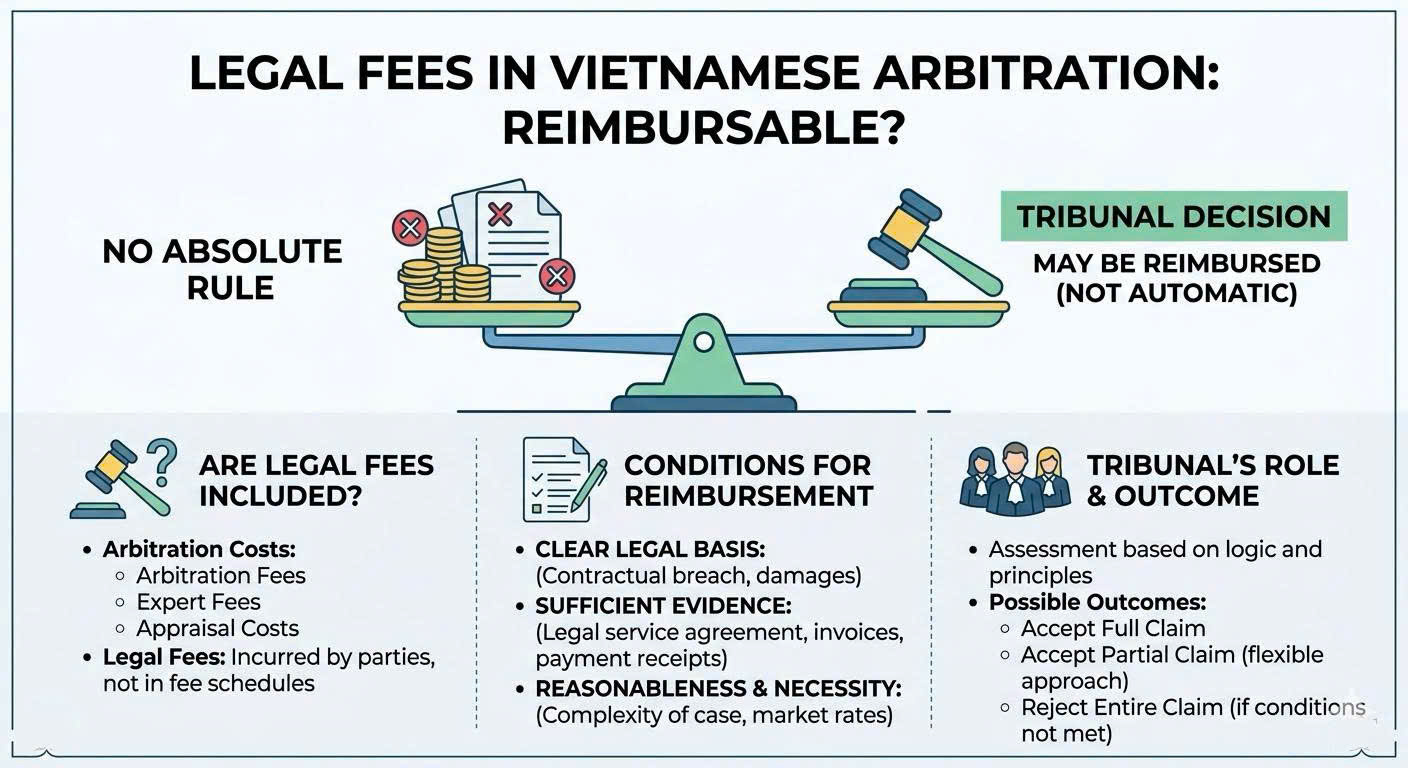
In arbitration proceedings in Vietnam, legal fees are actual expenses incurred when parties engage lawyers for advice and representation in dispute resolution. However, unlike certain legal systems that apply the principle that “the losing party bears all costs,” Vietnamese law does not provide an absolute rule on the reimbursement of legal fees in arbitration.
Under the current legal framework, the Arbitral Tribunal has the authority to consider and decide on the allocation of arbitration costs, which may include legal fees. This means that legal fees may be reimbursed, but such reimbursement is not automatic; rather, it depends on the Tribunal’s assessment in each specific dispute.
1. Legal costs, legal fees, and scope of regulation
In addition to arbitration fees, various other procedural costs may arise during the resolution of disputes through commercial arbitration, including:
- Legal fees
- Expert fees
- Appraisal costs
- Evidence collection costs
Unlike arbitration fees, these costs:
- Are not directly defined in the 2010 Law on Commercial Arbitration
- Are not included in the fee schedules of arbitration centers
- Are borne by the parties during the proceedings
Nevertheless, the Arbitral Tribunal may still take these costs into account when deciding on cost allocation in the award, provided that the parties make such a request.
2. Legal basis and practice of reimbursing legal fees
Although arbitration law does not explicitly regulate legal fees, in practice, Arbitral Tribunals may accept claims for reimbursement based on general legal principles.
Pursuant to Clause 1, Article 55 of the Law on Lawyers, the basis for determining lawyers’ remuneration includes:
“(a) The content and nature of legal services;
(b) The time and effort spent by the lawyer;
(c) The lawyer’s experience and reputation”.
Under Clause 2, Article 55 of the Law on Lawyers, methods of calculating lawyers’ fees include:
“(a) Hourly rates;
(b) Fixed fees per case;
(c) Fees calculated as a percentage of the dispute value, contract value, or project value;
(d) Long-term contracts with fixed remuneration”.
Legal fees are considered actual and direct damages arising from contractual breaches. Therefore, they are frequently accepted by Arbitral Tribunals in arbitration proceedings.
3. Conditions for reimbursement
In practice, claims for reimbursement of legal fees are typically accepted when the following conditions are satisfied:
First, a clear legal basis: Legal fees must be identified as actual damages directly resulting from the breaching party’s conduct.
Second, sufficient supporting evidence: The claiming party must provide adequate documentation, including:
- Legal service agreements;
- Valid invoices and payment receipts;
- Documents evidencing the performance of legal services.
Third, reasonableness and necessity:
The claimed amount must:
- Be appropriate to the nature, complexity, and value of the dispute;
- Not exceed the prevailing market rates for similar legal services.
If these conditions are not met, the Arbitral Tribunal may:
- Reduce the amount of reimbursable costs; or
- Reject the claim for legal fees in its entirety.
4. Practice at arbitration centers
In disputes resolved at commercial arbitration centers, do parties have the right to request reimbursement of legal fees?
In Arbitral Award No. 60/24 HCM dated November 22, 2024, the Arbitral Tribunal of T5 (V1) Center in Ho Chi Minh City ruled:
“The Arbitral Tribunal accepts the claim of T4 Co., Ltd. and orders K Joint Stock Company to pay legal fees in the amount of VND 107,646,000.”
In practice at MCAC, according to an arbitral award issued in 2025, the Tribunal held:
“The Arbitral Tribunal finds that the Respondent’s breach of payment obligations forced the Claimant to initiate arbitration and participate in the entire proceedings. This resulted in legal costs such as preparation, evidence collection, and participation in arbitration. In this case, the Claimant authorized Mr. Nguyen Thanh X under a mandate agreement dated April 23, 2025, and actually paid remuneration in accordance with that agreement. On the basis of fairness, the Tribunal decides that the Respondent shall bear 50% of the actual legal costs incurred by the Claimant, amounting to VND 75,000,000.”
To substantiate this claim, the Claimant provided:
- The authorization agreement dated April 23, 2025;
- The payment receipt dated June 16, 2025.
Based on this evidence, the Tribunal ordered the Respondent to bear 50% of the actual legal costs, equivalent to VND 75 million.
In practice, parties in arbitration proceedings at arbitration centers have the right to request reimbursement of legal fees, and such requests may be accepted in whole or in part.
5. Conclusion
In arbitration proceedings in Vietnam, legal fees may be reimbursed, but this depends on the Tribunal’s assessment of their reasonableness. In practice, Arbitral Tribunals tend to adopt a flexible approach, often granting partial reimbursement based on proportionality to the nature and value of the dispute. Where reasonableness cannot be established or legal grounds are insufficient, claims for reimbursement may be entirely rejected.
Therefore, parties in contractual relationships should proactively stipulate responsibility for legal fees and prepare sufficient documentation to substantiate actual expenses incurred. This not only helps protect their rights and interests but also provides a solid basis for the Arbitral Tribunal to allocate costs in a fair and reasonable manner.
The article above has analyzed in detail is "Legal fees in arbitration proceedings: are they reimbursable?". For more detailed information or legal assistance, please contact the MCAC Secretariat:
- Hotline: 0935 925 068 - 0236 3656799
- Email: contact@mcac.vn
- Read more: Benefits and risks of using artificial intelligence in Arbitration
Related news
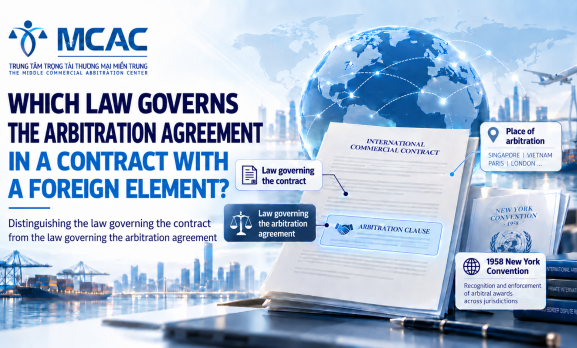
WHICH LAW GOVERNS AN ARBITRATION AGREEMENT IN A CONTRACT WITH FOREIGN ELEMENTS?
In international commercial transactions, parties often agree on the law governing their contract and on arbitration as the method of dispute resolution. However, does the law governing the contract automatically govern the arbitration agreement? If the parties have not agreed on the applicable law, which country's law is used to determine the validity of the arbitration agreement?
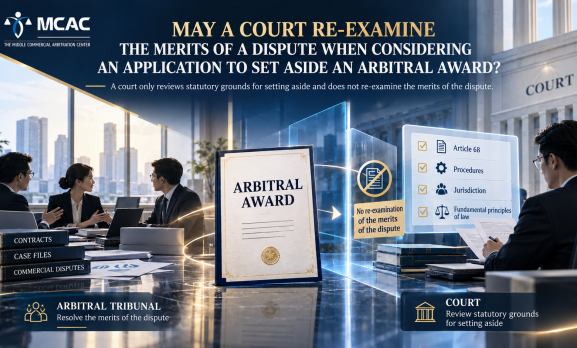
MAY A COURT RE-EXAMINE THE MERITS OF A DISPUTE WHEN CONSIDERING AN APPLICATION TO SET ASIDE AN ARBITRAL AWARD?
When considering an application to set aside an arbitral award, is the Court entitled to reassess evidence, reconsider the parties' rights and obligations, or alter the findings and decisions made by the Arbitral Tribunal?