Working hour: Monday – Friday/8AM – 5PM
|Email: contact@mcac.vn
|Hotline: (+84) 935 925 068 - 0236 3656799
| Language:



Điện thoại: (+84) 935 925 068
Language:

WHY SHOULD BUSINESSES ESTABLISH AN ARBITRATION CLAUSE FROM THE CONTRACT FORMATION STAGE?
26/05/2026


According to the 2010 Law on Commercial Arbitration, an arbitration agreement is the mandatory legal basis for establishing the jurisdiction of arbitration in dispute resolution. This means that arbitration only has jurisdiction when the parties have entered into a valid agreement, established either before or after a dispute arises.
However, from a practical perspective, establishing an arbitration clause at the contract formation stage is particularly important in ensuring the effectiveness of this dispute resolution mechanism and minimizing procedural risks in the future.
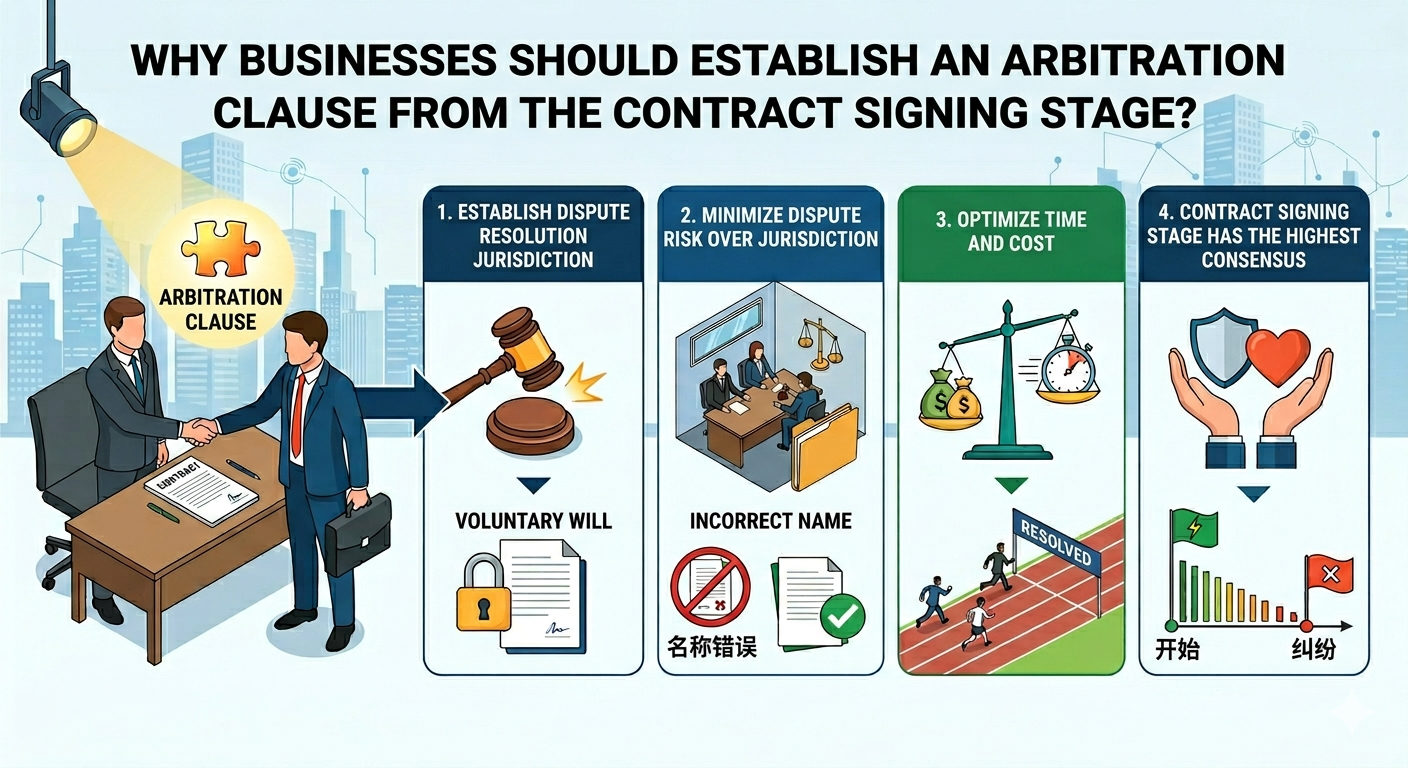
1. An Arbitration Agreement Is a Prerequisite for Establishing Jurisdiction
Commercial arbitration operates based on the voluntary agreement of the parties. Therefore, the jurisdiction of commercial arbitration arises entirely from the parties’ agreement. The arbitration agreement is the legal basis giving rise to the arbitral tribunal’s authority over a specific dispute. The 2010 Law on Commercial Arbitration affirms that: “Disputes shall be resolved by arbitration if the parties have an arbitration agreement.”
Accordingly, if at the time a dispute arises the contract does not contain an arbitration clause, or the parties cannot subsequently agree to submit the dispute to arbitration, the arbitral tribunal will not have jurisdiction over the matter.
In practice at The Middle Commercial Arbitration Center (MCAC), many businesses only begin considering arbitration after disputes have arisen. However, at that stage, reaching consensus on the dispute resolution mechanism often depends on the willingness of the opposing party and is no longer guaranteed.
Therefore, establishing an arbitration clause from the outset enables businesses to predetermine the dispute resolution forum and avoid dependence on further agreement once a dispute has already occurred.
2. Limiting Risks of Jurisdictional Disputes and Challenges to the Validity of the Arbitration Agreement
In arbitral proceedings, disputes regarding jurisdiction are among the issues that may arise at the very beginning of the case.
The parties may dispute matters such as:
- The validity of the arbitration agreement;
- Whether the dispute falls within the scope of arbitration;
- The name and jurisdiction of the arbitral institution.
Practical experience at the Mien Trung Commercial Arbitration Center (MCAC) shows common mistakes such as:
- Incorrectly stating the name of the arbitration center;
- Unclear wording regarding the parties’ intention to choose arbitration;
- Arbitration clauses conflicting with other contractual provisions.
These mistakes may lead to legal consequences including:
- Jurisdictional disputes;
- Delays in the resolution process;
- Increased procedural costs;
- Impairment of the enforceability of the arbitration agreement.
Therefore, establishing an arbitration clause at the contract formation stage plays an important role in minimizing risks relating to the validity and jurisdiction of arbitration.
3. The Contract Formation Stage Is the Time of Highest Mutual Consensus
Commercial arbitration is founded upon the voluntary intent of the parties. Therefore, the contract formation stage is typically when the parties are still in a cooperative relationship, commercial interests have not yet come into conflict, and the level of goodwill in negotiations remains high.
By contrast, once a dispute has arisen:
- The cooperative relationship is often adversely affected;
- The parties’ interests may become conflicting;
- Defensive and adversarial attitudes increase;
- One party may no longer be willing to accept the dispute resolution mechanism proposed by the other party.
Accordingly, establishing an arbitration clause from the beginning is the solution that best ensures the feasibility of the agreement.
4. Optimizing Time and Costs When Disputes Arise
In commercial practice, time is of particular importance to business operations because, when disputes arise, enterprises often must simultaneously handle debts, preserve evidence, implement measures to minimize losses, and quickly stabilize business activities.
If the arbitration clause has been clearly established from the beginning:
- Businesses can promptly commence arbitral proceedings;
- No additional time is required to renegotiate the dispute resolution mechanism;
- Jurisdictional disputes can be minimized from the initial stage of proceedings.
Conversely, in the absence of a clear arbitration clause, businesses may spend additional time resolving procedural issues before the dispute can even be examined on its merits.
Conclusion
Establishing an arbitration clause from the contract formation stage is a strategic requirement in corporate legal risk management.
This not only helps:
- Predetermine jurisdiction for dispute resolution;
- Minimize disputes regarding the validity of the arbitration agreement;
- Optimize procedural time and costs;
but also ensures that the dispute resolution mechanism operates consistently in accordance with the parties’ original intentions.
In practice at the Mien Trung Commercial Arbitration Center (MCAC), a clearly drafted arbitration clause from the outset is always a crucial factor in ensuring efficient proceedings and minimizing procedural disputes.
SAMPLE ARBITRATION CLAUSES
The Middle Commercial Arbitration Center (MCAC) recommends that parties refer to the following sample arbitration clauses:
A. Standard Arbitration Clause (Ordinary Procedure)
“Article …: Dispute Resolution
- Any dispute arising out of or relating to this Contract shall be resolved by arbitration at the Mien Trung Commercial Arbitration Center (MCAC) in accordance with its Rules of Arbitration.
- The number of arbitrators shall be … (one or three).
- The place of arbitration shall be … (city and/or country).
- The language of arbitration shall be … .
- The governing law of this Contract shall be … .”
B. Sample Arbitration Clause for Expedited Procedure
“Article …: Dispute Resolution
- Any dispute arising out of or relating to this Contract shall be resolved by arbitration at The Middle Commercial Arbitration Center (MCAC) in accordance with its Rules of Arbitration.
The parties agree that the arbitration proceedings shall be conducted under the Expedited Procedure prescribed in the MCAC Rules of Arbitration.
- The place of arbitration shall be … .
- The language of arbitration shall be … .
- The governing law of this Contract shall be … .”
The article above has analyzed in detail is "Why should businesses establish an arbitration clause from the contract formation stage?". For more detailed information or legal assistance, please contact the MCAC Secretariat:
- Hotline: 0935 925 068 - 0236 3656799
- Email: contact@mcac.vn
- Read more:Statement of defense of the respondent in Arbitration proceedings at MCAC
Related news
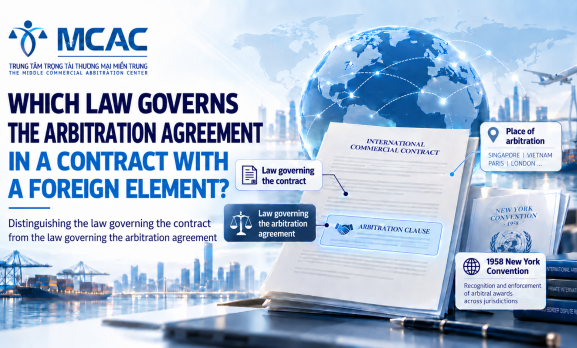
WHICH LAW GOVERNS AN ARBITRATION AGREEMENT IN A CONTRACT WITH FOREIGN ELEMENTS?
In international commercial transactions, parties often agree on the law governing their contract and on arbitration as the method of dispute resolution. However, does the law governing the contract automatically govern the arbitration agreement? If the parties have not agreed on the applicable law, which country's law is used to determine the validity of the arbitration agreement?
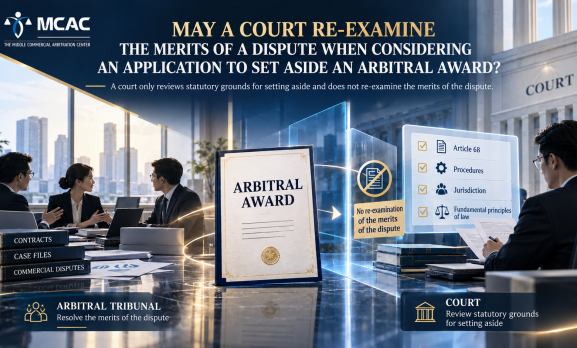
MAY A COURT RE-EXAMINE THE MERITS OF A DISPUTE WHEN CONSIDERING AN APPLICATION TO SET ASIDE AN ARBITRAL AWARD?
When considering an application to set aside an arbitral award, is the Court entitled to reassess evidence, reconsider the parties' rights and obligations, or alter the findings and decisions made by the Arbitral Tribunal?