Working hour: Monday – Friday/8AM – 5PM
|Email: contact@mcac.vn
|Hotline: (+84) 935 925 068 - 0236 3656799
| Language:



Điện thoại: (+84) 935 925 068
Language:

News


CAN A CLAIMANT AMEND OR SUPPLEMENT ITS CLAIMS DURING ARBITRATION PROCEEDINGS?
Accordingly, after filing the Statement of Claim with an arbitration center, may the Claimant amend or supplement its claims? Until what stage may such amendments or additions be made, and in what circumstances may the Arbitral Tribunal (Tribunal) decline to accept them?

BUSINESS PERSPECTIVE: CHECKLIST OF 07 ITEMS TO PREPARE BEFORE THE FIRST ARBITRATION HEARING
For businesses participating in arbitral proceedings for the first time, preparation for the hearing should be systematic and should go beyond merely compiling documents. Below are 07 matters businesses should note before attending their first arbitration hearing at MCAC.
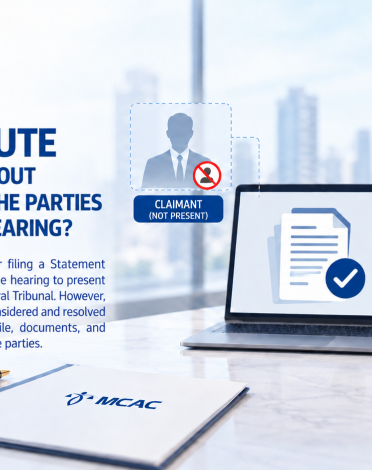
CAN A DISPUTE BE RESOLVED WITHOUT THE PARTIES BEING PRESENT AT THE ARBITRAL HEARING?
Many businesses assume that once a Statement of Claim has been filed, the parties are required to attend the hearing in order to present their cases and arguments directly before the Arbitral Tribunal. However, in certain circumstances, a dispute may be considered and resolved primarily on the basis of the case file, documents and evidence, without the parties being present.
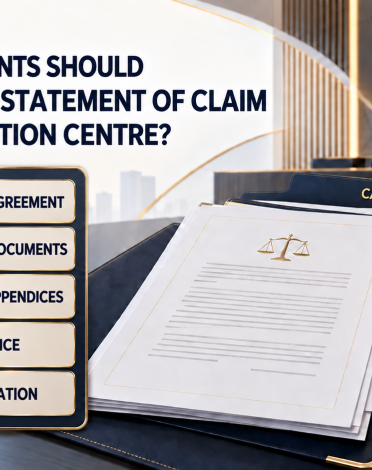
WHAT DOCUMENTS MUST ACCOMPANY A STATEMENT OF CLAIM FILED WITH AN ARBITRATION CENTER?
When initiating arbitration proceedings, properly preparing the Statement of Claim together with the accompanying documents and evidence is an important first step. The Statement of Claim sets out the Claimant’s requests; however, in order for the arbitration center to process the case and for the Arbitral Tribunal to have sufficient grounds to resolve the dispute, the Claimant should also submit documents establishing the Tribunal’s jurisdiction, the disputed legal relationship, and the basis for each claim.
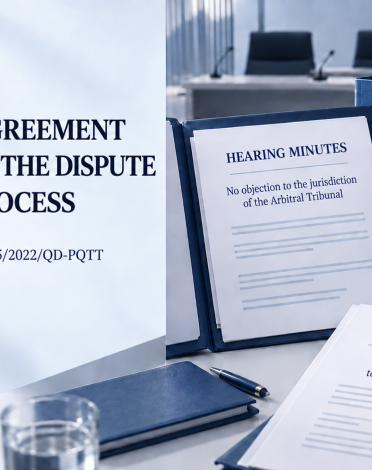
ARBITRATION AGREEMENT ARISING DURING THE DISPUTE RESOLUTION PROCESS: COMMENTARY ON DECISION NO. 1185/2022/QĐ-PQTT OF THE PEOPLE'S COURT OF HO CHI MINH CITY
An arbitration agreement serves as the basis for determining the jurisdiction of arbitration to resolve disputes. Under the Law on Commercial Arbitration, an arbitration agreement may be entered into either before or after a dispute arises and must be made in a form compliant with applicable law.
Decision No. 1185/2022/QĐ-PQTT dated 29 July 2022 of the People’s Court of Ho Chi Minh City concerns the determination of an arbitration agreement during the dispute resolution process and the parties’ right to object to the jurisdiction of the Arbitral Tribunal.

ARBITRATION AGREEMENTS ENTERED INTO BY PERSONS WHO ARE NOT LEGAL REPRESENTATIVES: COMMENTARY ON DECISION NO. 810/2017/QD-PQTT OF THE PEOPLE’S COURT OF HO CHI MINH CITY
Decision No. 810/2017/QD-PQTT dated 29 June 2017 of the People’s Court of Ho Chi Minh City provides a noteworthy example. Although the person who signed the contract on behalf of the Respondent was not its legal representative, the Court nevertheless held that the arbitration agreement remained valid, taking into account the parties’ subsequent performance of the contract and the conduct of the person having proper authority in relation to the transaction.