Working hour: Monday – Friday/8AM – 5PM
|Email: contact@mcac.vn
|Hotline: (+84) 935 925 068 - 0236 3656799
| Language:



Điện thoại: (+84) 935 925 068
Language:

ARBITRATION COSTS IN ARBITRAL PROCEEDINGS: WHAT BUSINESSES NEED TO KNOW
10/06/2026


When considering commercial arbitration as a dispute resolution mechanism, many businesses often ask the following questions: Is arbitration expensive? Who is responsible for paying the arbitration costs? How are such costs determined?
In practice, many businesses assume that resolving disputes through arbitration is always more costly than litigation before the courts. However, this perception does not fully reflect the nature of arbitration or the legal framework governing the determination and allocation of arbitration costs under the law and the procedural rules of each arbitral institution.
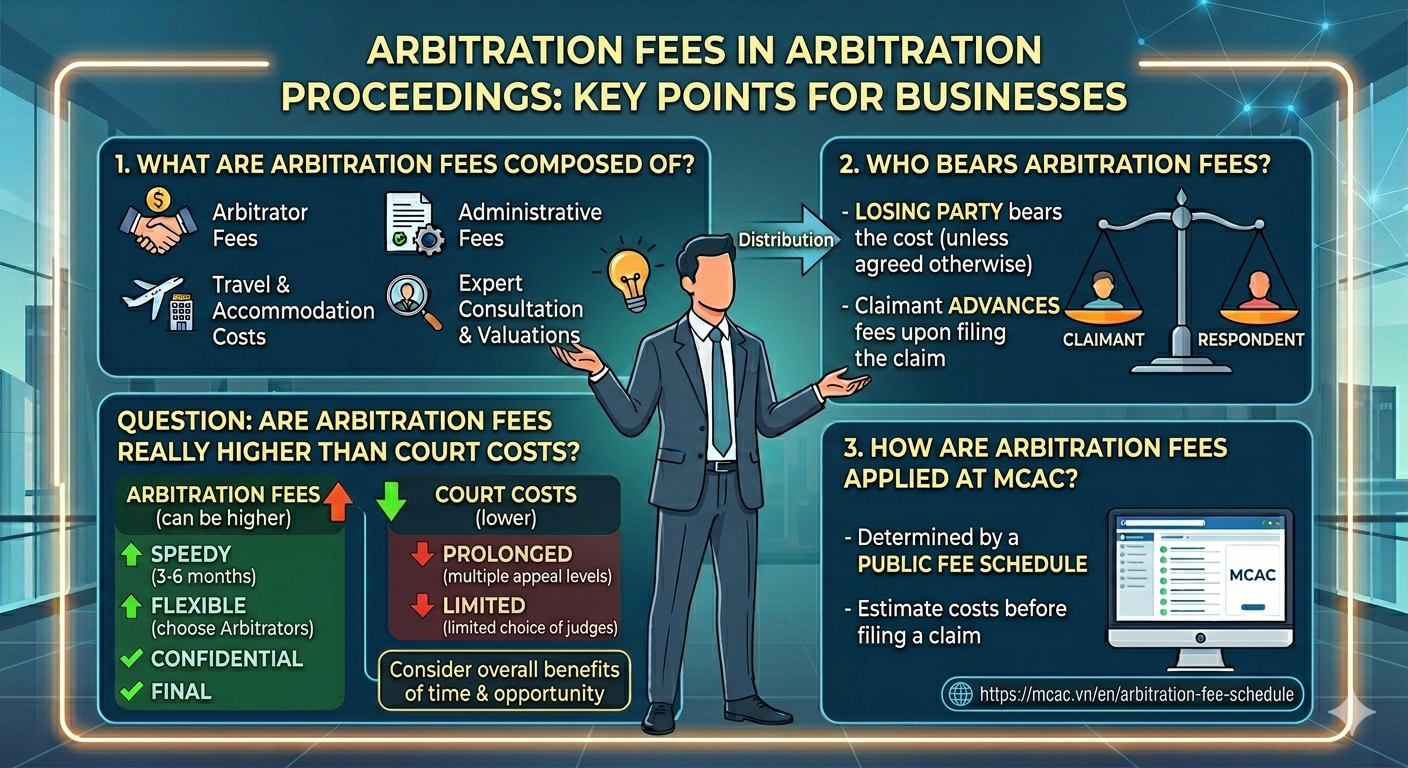
1. What Do Arbitration Costs Include?
Arbitration costs are the expenses that the parties must pay for the administration and conduct of arbitral proceedings. Depending on the nature of the dispute and the rules of a particular arbitral institution, these costs may vary.
Pursuant to Article 34 of the 2010 Law on Commercial Arbitration of Vietnam, arbitration costs include:
a) Fees and remuneration payable to arbitrators, including their travel expenses and other related costs;
b) Fees for expert consultations and other assistance requested by the Arbitral Tribunal;
c) Administrative fees;
d) Fees for the appointment of ad hoc arbitrators by an arbitral institution at the request of the disputing parties; and
e) Fees for other supporting services provided by the arbitral institution.
Article 34 of the Arbitration Rules of the Central Vietnam Commercial Arbitration Center (MCAC) further clarifies that arbitration costs at MCAC include:
- Fees payable to the arbitrators for resolving the dispute;
- MCAC’s administrative expenses incurred in connection with the proceedings;
- Travel, accommodation, and other related expenses of the arbitrators, as prescribed in MCAC’s applicable guidelines in force at the time the estimated costs are prepared, together with expenses for other supporting services requested by the Arbitral Tribunal;
- Costs of appraisal, asset valuation, expert consultation, and other supporting services required by the Arbitral Tribunal.
Accordingly, arbitration costs are not limited to filing fees but encompass the expenses necessary to ensure the effective administration of the entire arbitral process, including case management, organization of hearings, remuneration of arbitrators, and other professional services required under applicable regulations.
2. Allocation of Arbitration Costs: Who Bears the Costs?
Vietnamese law also establishes principles governing the allocation of arbitration costs. Under Clause 3, Article 34 of the Law on Commercial Arbitration, the losing party shall bear the arbitration costs unless otherwise agreed by the parties or otherwise decided by the Arbitral Tribunal based on the outcome of the dispute and the circumstances of the case.
Similarly, Article 36 of the MCAC Arbitration Rules provides that the Arbitral Tribunal shall allocate arbitration costs unless the parties have agreed otherwise. The Tribunal may also order one party to reimburse all or part of the legal fees or other reasonable expenses incurred by the opposing party.
In practice, when commencing arbitration proceedings, the claimant is typically required to make an advance payment of arbitration costs in accordance with the notice issued by the arbitral institution so that the case may be accepted for administration. However, such advance payment does not necessarily mean that the claimant will ultimately bear those costs.
Upon rendering the final award, the Arbitral Tribunal will determine the allocation of arbitration costs based on the outcome of the case, the extent to which each party’s claims are accepted, and other relevant circumstances.
Furthermore, Article 61 of the 2010 Law on Commercial Arbitration requires that an arbitral award include provisions on the allocation of arbitration costs and other related expenses, thereby providing the legal basis for the parties to perform their obligations under the award.
Is Arbitration Really More Expensive Than Court Litigation?
This is one of the most common concerns for businesses when deciding whether to choose arbitration as their preferred dispute resolution mechanism.
In reality, for certain disputes - particularly those involving high-value claims—the arbitration costs may indeed exceed court filing fees. However, comparing only the amount of fees payable without considering the corresponding advantages presents an incomplete assessment.
Compared with court litigation, commercial arbitration offers several significant benefits. For businesses, time is often one of the most critical considerations in dispute resolution.
In practice, depending on the nature and complexity of the dispute, many arbitration cases can be resolved within approximately three to six months from the establishment of the Arbitral Tribunal and the commencement of proceedings. This timeframe is generally much shorter than court litigation, which may involve multiple levels of adjudication and appeals.
Moreover, arbitration procedures provide substantial flexibility. The parties may agree on the place of arbitration, language, number of arbitrators, and appoint arbitrators with expertise relevant to the subject matter of the dispute. Arbitral proceedings are conducted confidentially, and arbitral awards are final and binding, without the need for multiple levels of judicial review.
From a business perspective, the shorter the dispute resolution process, the lower the opportunity costs, management expenses, and losses arising from interruptions to business operations. Consequently, in many cases, the commercial benefits offered by arbitration significantly outweigh any difference in costs compared with court proceedings.
3. How Are Arbitration Costs Applied at MCAC?
At the Central Vietnam Commercial Arbitration Center (MCAC), arbitration costs are determined in accordance with the MCAC Schedule of Arbitration Fees and the MCAC Arbitration Rules.
The Schedule of Arbitration Fees is publicly available on MCAC’s website at mcac.vn/en/schedule-of-the-arbitration-cost, enabling parties to estimate the expected costs before selecting arbitration as their dispute resolution method.
Under the MCAC Schedule of Arbitration Fees, the published fees do not include travel, accommodation, and other related expenses of arbitrators and hearing secretaries, nor do they include appraisal costs, asset valuation expenses, expert consultation fees, or other supporting costs requested by the Arbitral Tribunal.
These additional expenses will be determined and notified separately in accordance with MCAC’s regulations and will depend on the specific requirements of each case.
Conclusion
Arbitration costs are undoubtedly an important consideration when selecting a dispute resolution mechanism, but they should not be the sole determining factor.
In addition to cost considerations, businesses should evaluate the broader advantages offered by commercial arbitration, including its speed, procedural flexibility, confidentiality, and the finality and enforceability of arbitral awards.
A thorough understanding of the applicable Schedule of Arbitration Fees and the Arbitration Rules of the chosen arbitral institution will enable businesses to manage legal risks more effectively and make informed decisions regarding the most appropriate dispute resolution mechanism.
The article above has analyzed in detail is "ARBITRATION COSTS IN ARBITRAL PROCEEDINGS: WHAT BUSINESSES NEED TO KNOW". For more detailed information or legal assistance, please contact the MCAC Secretariat:
- Hotline: 0935 925 068 - 0236 3656799
- Email: contact@mcac.vn
- Read more:CHECKLIST FOR DRAFTING ARBITRATION CLAUSES: COMMON ISSUES TO NOTE
Related news
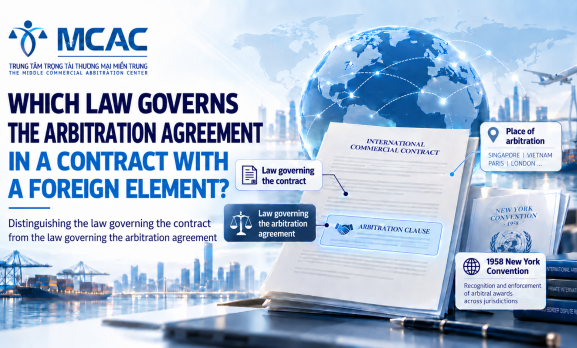
WHICH LAW GOVERNS AN ARBITRATION AGREEMENT IN A CONTRACT WITH FOREIGN ELEMENTS?
In international commercial transactions, parties often agree on the law governing their contract and on arbitration as the method of dispute resolution. However, does the law governing the contract automatically govern the arbitration agreement? If the parties have not agreed on the applicable law, which country's law is used to determine the validity of the arbitration agreement?
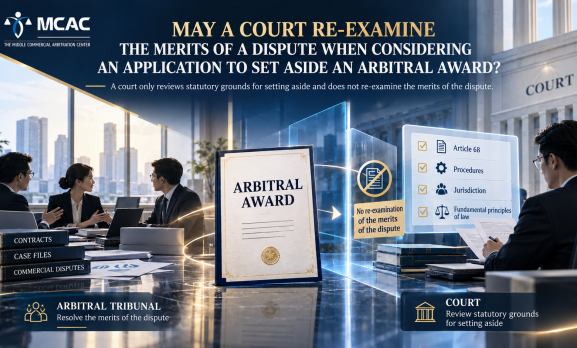
MAY A COURT RE-EXAMINE THE MERITS OF A DISPUTE WHEN CONSIDERING AN APPLICATION TO SET ASIDE AN ARBITRAL AWARD?
When considering an application to set aside an arbitral award, is the Court entitled to reassess evidence, reconsider the parties' rights and obligations, or alter the findings and decisions made by the Arbitral Tribunal?