Working hour: Monday – Friday/8AM – 5PM
|Email: contact@mcac.vn
|Hotline: (+84) 935 925 068 - 0236 3656799
| Language:



Điện thoại: (+84) 935 925 068
Language:

DETERMINING THE PROCEDURAL STATUS OF PARTIES IN ARBITRATION PROCEEDINGS: A PRACTICAL PERSPECTIVE
19/06/2026


1. Introduction
Correctly determining the procedural status of parties is one of the essential conditions for ensuring the legality of dispute resolution through arbitration. If a person or entity that does not possess rights or obligations in the disputed legal relationship is improperly identified as a claimant or respondent, such misidentification may directly affect the parties’ right to be heard and may also constitute grounds for setting aside an arbitral award pursuant to Point (b), Clause 2, Article 68 of the 2010 Law on Commercial Arbitration (“LCA”).

Unlike civil proceedings before courts, the current legal framework governing commercial arbitration does not recognize the procedural status of a “person with related rights and obligations.” Accordingly, parties to an arbitral dispute are generally identified only as claimants and respondents, in addition to other participants who may be involved in certain circumstances, such as witnesses, experts, and interpreters, in accordance with applicable laws and arbitration rules. This characteristic gives rise to practical challenges, particularly in disputes involving multiple contracts or transactions with multiple participants.
2. Legal Basis for Determining Party Status in Arbitration Proceedings
Clause 3, Article 3 of the LCA provides that:
“Parties to a dispute are Vietnamese or foreign individuals, agencies, or organizations participating in arbitration proceedings as claimants or respondents.”
With respect to third parties, the LCA does not provide a mechanism for participation in arbitration proceedings as a “person with related rights and obligations.” Where necessary, an arbitral tribunal may collect and examine documents and evidence, hear witness testimony, or appoint experts pursuant to Articles 46 and 47 of the LCA. Furthermore, under Articles 19 and 20 of the MCAC Arbitration Rules, the arbitral tribunal has the authority to require parties to produce evidence, summon witnesses, or consider any evidentiary sources necessary to ascertain the objective truth of the dispute. However, the involvement of such persons does not confer upon them the status of parties to the arbitration proceedings.
3. Dispute Resolution Practice
Decision No. 23/2025/QĐ-PQTT dated 29 December 2025 of the People's Court of Hanoi
(Regarding the Setting Aside of an Arbitral Award)
In a dispute reviewed by the People's Court of Hanoi under proceedings for setting aside an arbitral award, an Arbitral Tribunal of Arbitration Center A accepted and resolved a dispute arising from a Share Purchase Agreement between Company B (the purchaser) and four individual shareholders who transferred shares in Company C.
According to the case file, in addition to the Share Purchase Agreement, the parties also entered into a Security Agreement concerning 85% of the shares of Company C to secure performance of the transaction. Although Company C was not a transferor under the Share Purchase Agreement, it was designated as the recipient of the deposit payment and was also a signatory to the Security Agreement.
After the dispute arose, Company B initiated arbitration at Arbitration Center A, requesting that Company C and the four individual shareholders refund the deposit and perform financial obligations arising from the transaction. Based on its review of the case file, the Arbitral Tribunal determined that Company C would participate in the proceedings as a Respondent and subsequently rendered an arbitral award resolving the dispute.
Disagreeing with the award, Company C filed an application with the Court seeking to set aside the award on the grounds that it was not the seller under the Share Purchase Agreement, was not the party that received the deposit, and that the Arbitral Tribunal had improperly identified Company C as a respondent, contrary to the true nature of the disputed legal relationship.
Regarding this issue, the Reviewing Panel held that Clause 3, Article 3 of the LCA provides that a respondent is “the party against whom dispute resolution is sought.” Accordingly, the determination of respondent status must be based on the disputed legal relationship and the actual rights and obligations arising among the parties.
Upon reviewing the documents and evidence in the case file, the Reviewing Panel found that Company C was not a transferor under the Share Purchase Agreement. The fact that the deposit was transferred into Company C’s bank account was merely carried out pursuant to the instructions of the selling shareholders and did not give rise to any obligation on the part of Company C to refund the deposit.
On that basis, the Reviewing Panel concluded that the Arbitral Tribunal had incorrectly determined the procedural status of the respondent, resulting in arbitral proceedings that were inconsistent with the parties’ agreement, the provisions of the Law on Commercial Arbitration, and the Arbitration Rules of Arbitration Center A. Consequently, the lawful rights and interests of Company C and other related individuals were adversely affected.
Furthermore, the incorrect identification of the party bearing the relevant obligations resulted in an arbitral award imposing obligations upon an improper subject. The award was therefore unclear in content, lacked enforceability, and contravened the fundamental principles of Vietnamese law set out in Clauses 2 and 5, Article 3 of the 2015 Civil Code.
Accordingly, the Court relied on Points (b) and (đ), Clause 2, Article 68 of the 2010 Law on Commercial Arbitration to grant Company C’s application and set aside the arbitral award in its entirety.
4. Conclusion
This case demonstrates that correctly determining the procedural status of parties in arbitration proceedings is of critical importance to both the legality of the arbitral process and the validity of the arbitral award. Arbitral tribunals should therefore carefully consider the nature of the disputed legal relationship, the scope of the arbitration agreement, and the actual rights and obligations of each participant in order to accurately identify claimants and respondents, thereby minimizing the risk of arbitral awards being set aside due to errors in determining party status.
Related news
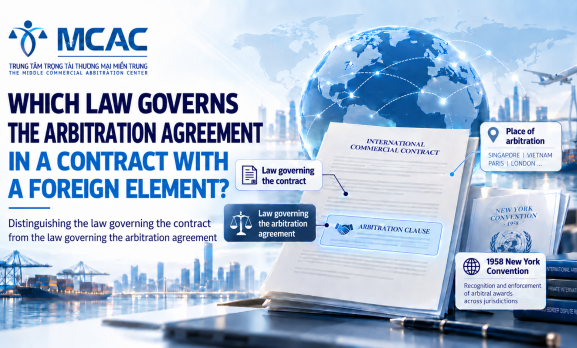
WHICH LAW GOVERNS AN ARBITRATION AGREEMENT IN A CONTRACT WITH FOREIGN ELEMENTS?
In international commercial transactions, parties often agree on the law governing their contract and on arbitration as the method of dispute resolution. However, does the law governing the contract automatically govern the arbitration agreement? If the parties have not agreed on the applicable law, which country's law is used to determine the validity of the arbitration agreement?
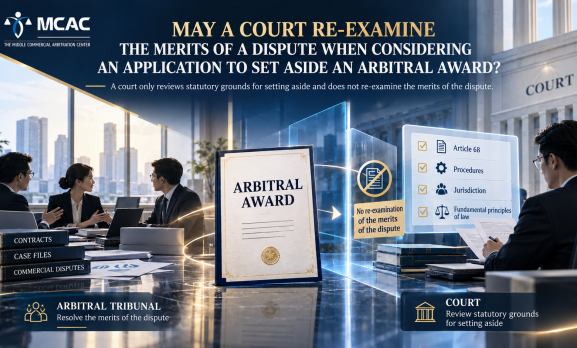
MAY A COURT RE-EXAMINE THE MERITS OF A DISPUTE WHEN CONSIDERING AN APPLICATION TO SET ASIDE AN ARBITRAL AWARD?
When considering an application to set aside an arbitral award, is the Court entitled to reassess evidence, reconsider the parties' rights and obligations, or alter the findings and decisions made by the Arbitral Tribunal?