Working hour: Monday – Friday/8AM – 5PM
|Email: contact@mcac.vn
|Hotline: (+84) 935 925 068 - 0236 3656799
| Language:



Điện thoại: (+84) 935 925 068
Language:

WHAT CAN THE SUCCESSFUL PARTY DO IF THE OTHER PARTY FAILS TO COMPLY WITH AN ARBITRAL AWARD?
14/07/2026


After an arbitral tribunal issues an arbitral award, the parties are obliged to voluntarily comply with the award in accordance with its terms. In practice, however, the party against whom the award is made may delay or deliberately refuse to perform its obligations. This raises an important question for many businesses: If the losing party fails to voluntarily comply with the arbitral award, what should the winning party do to protect its lawful rights and interests?
1. Legal Basis
Clause 1, Article 66 of the 2010 Law on Commercial Arbitration (“LCA”) provides:
“Upon expiry of the time limit for voluntary compliance with an arbitral award, if the party against whom the award is enforced fails to voluntarily comply with the award and does not request the setting aside of the arbitral award in accordance with Article 69 of this Law, or where the Court has issued a decision not to set aside the arbitral award, the party entitled to enforcement of the arbitral award may submit a request to the competent civil judgment enforcement authority for enforcement of the arbitral award.”
In addition, Clause 3, Article 2 of the 2025 Law on Civil Judgment Enforcement provides that:
Arbitral awards and decisions of arbitral tribunals on the application of interim emergency measures in accordance with the Law on Commercial Arbitration are decisions enforceable under the Law on Civil Judgment Enforcement.
This provision constitutes one of the legal grounds for determining that arbitral awards are subject to enforcement under the Law on Civil Judgment Enforcement, in a manner similar to court judgments and decisions, within the scope prescribed by law.
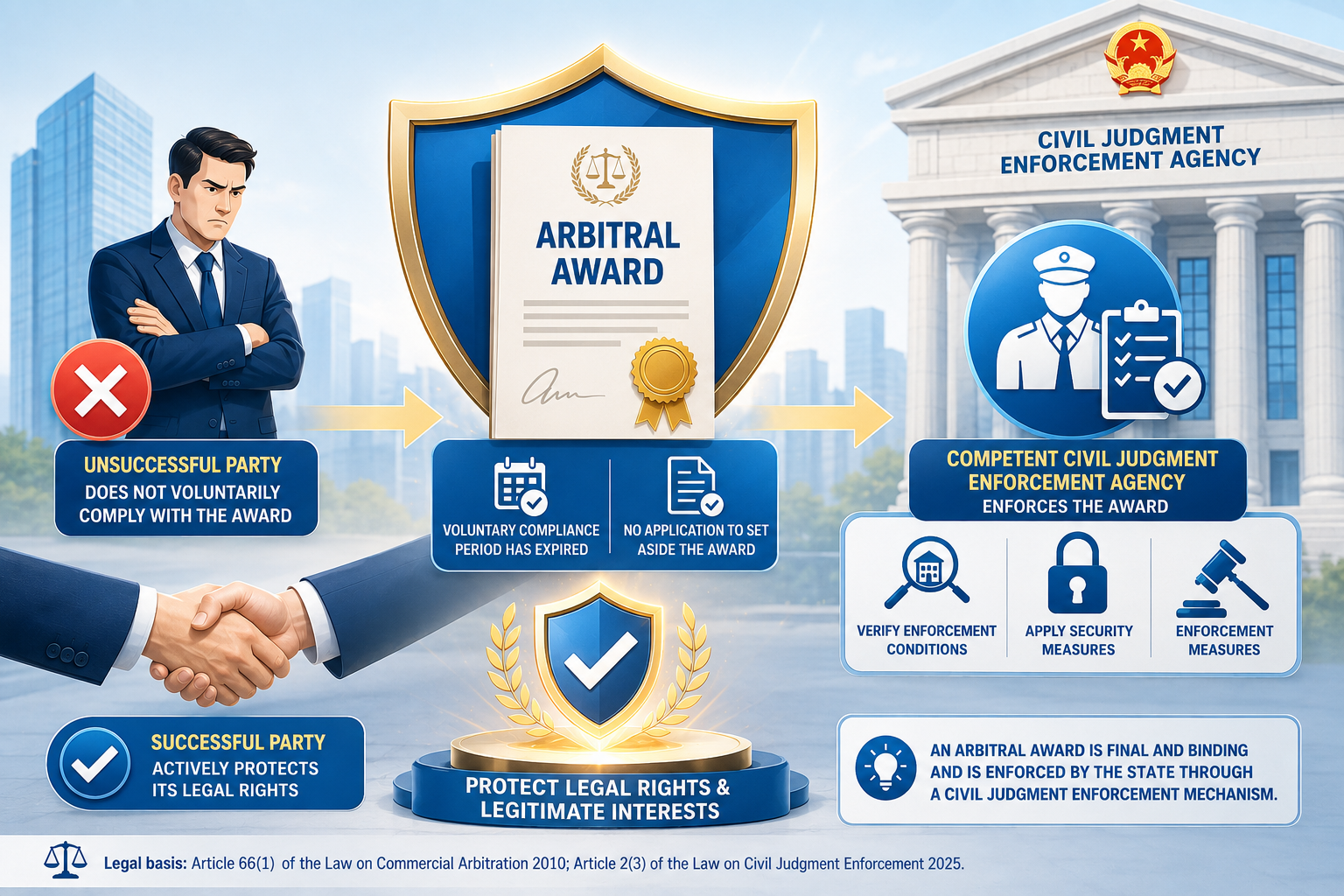
2. When May Enforcement of an Arbitral Award Be Requested?
The party entitled to enforcement may request the civil judgment enforcement authority to enforce the arbitral award when the following conditions are satisfied:
- Time for submitting the enforcement request: The arbitral award has become legally effective from the date of its issuance, and the party against whom the award is made has failed to voluntarily perform its obligations within the voluntary compliance period. This period may be 30 days or another period specified in the arbitral award. In addition, the party against whom the award is made has not requested that the arbitral award be set aside.
- Limitation period for requesting enforcement: The request must generally be submitted within five years from the date on which the arbitral award becomes legally effective, in accordance with the general provisions of the law on civil judgment enforcement.
3. What Should Businesses Keep in Mind?
Clause 5, Article 61 of the LCA provides:
“An arbitral award shall be final and binding from the date of its issuance.”
The failure of the party against whom the award is made to voluntarily perform its obligations does not affect the validity of the arbitral award. Instead, it gives rise to the right of the party entitled to enforcement to request the civil judgment enforcement authority to enforce the award in accordance with the law.
Upon receipt of a valid enforcement request and complete supporting documents, the civil judgment enforcement authority will carry out the enforcement procedures prescribed by law. These procedures may include verifying the conditions for enforcement and applying measures to secure enforcement or compulsory enforcement measures where the obligated party fails to perform, or fails to fully perform, its obligations.
4. Conclusion
An arbitral award is not only final and binding but is also guaranteed by the State through the civil judgment enforcement mechanism, in a manner similar to legally effective court judgments and decisions.
Businesses should therefore proactively monitor the voluntary compliance period and promptly exercise their right to request enforcement in order to protect their lawful rights and interests and ensure the practical effectiveness and enforceability of the arbitral award.
The article above has analyzed in detail is "What can the sucessful party do if the orther party fails to comply with an arbitral award ". For more detailed information or legal assistance, please contact the MCAC Secretariat:
- Hotline: 0935 925 068 - 0236 3656799
- Email: contact@mcac.vn
- Read more:CAN THE PARTIES REINITIATE PROCEEDINGS AFTER AN ARBITRAL AWARD IS SET ASIDE?
Related news
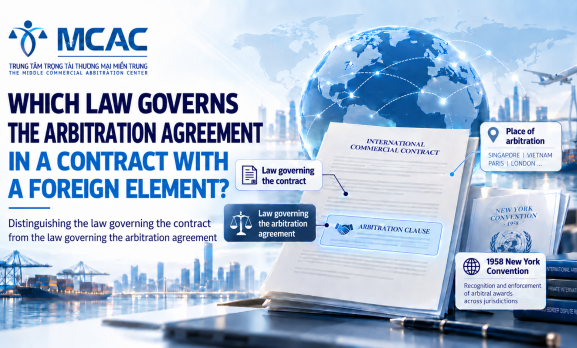
WHICH LAW GOVERNS AN ARBITRATION AGREEMENT IN A CONTRACT WITH FOREIGN ELEMENTS?
In international commercial transactions, parties often agree on the law governing their contract and on arbitration as the method of dispute resolution. However, does the law governing the contract automatically govern the arbitration agreement? If the parties have not agreed on the applicable law, which country's law is used to determine the validity of the arbitration agreement?
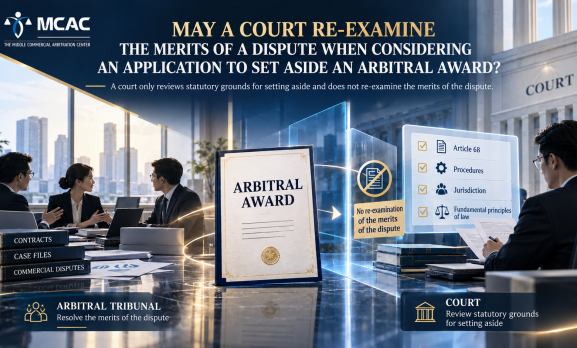
MAY A COURT RE-EXAMINE THE MERITS OF A DISPUTE WHEN CONSIDERING AN APPLICATION TO SET ASIDE AN ARBITRAL AWARD?
When considering an application to set aside an arbitral award, is the Court entitled to reassess evidence, reconsider the parties' rights and obligations, or alter the findings and decisions made by the Arbitral Tribunal?