Working hour: Monday – Friday/8AM – 5PM
|Email: contact@mcac.vn
|Hotline: (+84) 935 925 068 - 0236 3656799
| Language:



Điện thoại: (+84) 935 925 068
Language:

DETERMINING LATE-PAYMENT INTEREST IN ARBITRAL PROCEEDINGS: COMMENTARY ON DECISION NO. 131/2024/QĐ-PQTT ON THE SETTING ASIDE OF AN ARBITRAL AWARD
24/08/2026


In arbitral proceedings, the determination of late-payment interest must be based on the parties’ agreement, the nature of the underlying dispute, and the relevant provisions of law. However, a party’s disagreement with the legal basis or the interest rate applied by the Arbitral Tribunal does not, in itself, constitute a ground for setting aside an arbitral award.
Decision No. 131/2024/QĐ-PQTT dated June 27, 2024 of the People’s Court of Ho Chi Minh City is a notable practical case concerning a request to set aside an arbitral award in relation to the determination of late-payment interest.[1]
1. Summary of the Case
Company B Limited (the “Claimant”) and T6 Joint Stock Company (the “Respondent”) entered into Service Contract No. 0506/2022/HDDV/BCM-TLM dated June 30, 2022. Under the contract, the Claimant was responsible for providing rebranding services to the Respondent and for a residential development project in Dong Nai Province. The total contract value was VND 2,852,080,000, inclusive of value-added tax.
During the performance of the contract, the Respondent made an initial payment of VND 1,140,832,000. Subsequently, a dispute arose between the parties concerning the volume of completed work, acceptance of the deliverables, and the Respondent’s obligation to pay the service fees.
Pursuant to the arbitration agreement contained in the contract, the Claimant commenced arbitration proceedings against the Respondent at Arbitration Centre X, seeking payment of the outstanding service fees, late-payment interest, contractual penalties, legal costs, and arbitration fees.
On February 21, 2024, the Arbitral Tribunal rendered an award, partially upholding the Claimant’s claims and ordering the Respondent to pay VND 638,792,000 in outstanding service fees and VND 36,227,381 in late-payment interest.
2. Request to Set Aside the Arbitral Award
Disagreeing with the arbitral award, the Respondent submitted a request to the People’s Court of Ho Chi Minh City for the award to be set aside. Among the grounds relied upon by the Respondent was the allegation that the Arbitral Tribunal had incorrectly applied the law in determining the applicable late-payment interest rate.
The Respondent argued that the Arbitral Tribunal had relied on Articles 357 and 468 of the 2015 Civil Code and determined the late-payment interest rate at 10% per annum. According to the Respondent, because the dispute arose from a commercial service contract, the applicable interest should have been determined pursuant to Article 306 of the 2005 Law on Commerce.
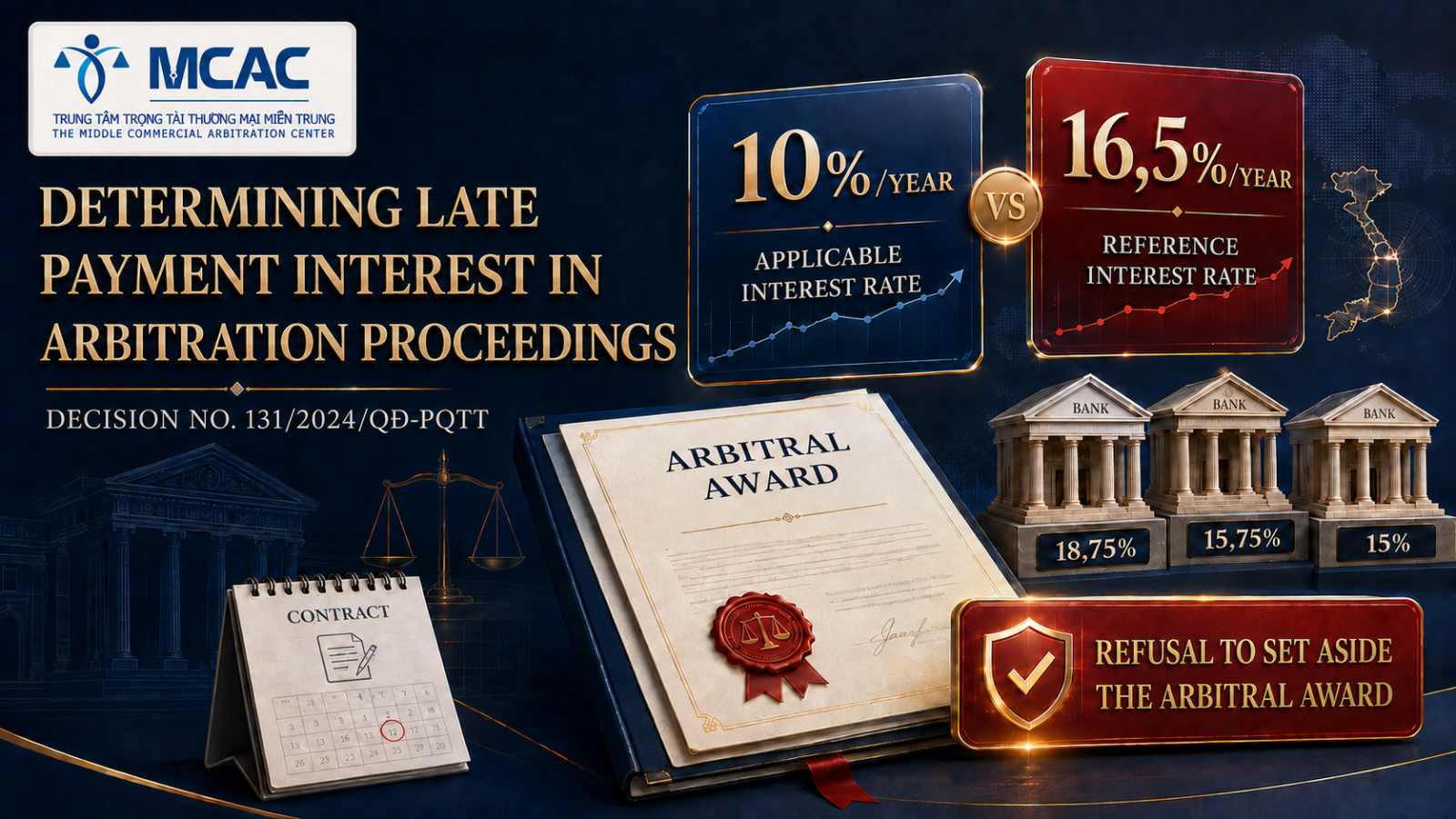
The Court noted that the overdue debt interest rates of three banks presented in the case file were 18.75%, 15.75%, and 15% per annum, respectively. The average overdue debt interest rate of the three banks was therefore 16.5% per annum.
Meanwhile, the Arbitral Tribunal had applied an interest rate of only 10% per annum, which was lower than the average rate of the three banks and therefore more favorable to the Respondent. The Court further held that the determination of the legal basis and the applicable interest rate fell within the merits of the dispute that had already been resolved by the Arbitral Tribunal.
On that basis, the Court rejected the Respondent’s request to set aside the arbitral award.
3. Commentary
Article 306 of the 2005 Law on Commerce provides that, where a party to a contract is late in making payment for goods, service fees, or other reasonable expenses, the aggrieved party has the right to claim interest on the overdue amount at the average overdue debt interest rate prevailing in the market, unless otherwise agreed by the parties or otherwise provided by law.
Case Law No. 09/2016/AL establishes that the average overdue debt interest rate prevailing in the market may be determined by reference to the overdue debt interest rates of at least three banks in the relevant locality. This serves as a basis for determining late-payment interest in business and commercial disputes to which Article 306 of the Law on Commerce applies.[2]
Similarly, Article 11 of Resolution No. 01/2019/NQ-HĐTP provides guidance on determining late-payment interest based on the average overdue debt interest rate of at least three commercial banks.[3]
In the present case, although the Court did not expressly cite Case Law No. 09/2016/AL, its comparison of the interest rates offered by three banks and determination of an average rate of 16.5% per annum reflects an approach consistent with the principles established by the case law and the guidance under Resolution No. 01/2019/NQ-HĐTP.
More importantly, the case illustrates the distinction between the merits of an arbitral dispute and the grounds for setting aside an arbitral award.
Clause 4, Article 71 of the 2010 Law on Commercial Arbitration provides that, when considering a request to set aside an arbitral award, the Court shall not re-adjudicate the merits of the dispute that have already been resolved by the Arbitral Tribunal.
Accordingly, a party’s disagreement with the legal basis or the interest rate applied by the Arbitral Tribunal does not automatically constitute a ground for setting aside the award. The Court’s review is not an opportunity for a dissatisfied party to have the merits of the dispute reconsidered. Rather, the setting aside mechanism is limited to the specific grounds prescribed by law.
Under Clause 2, Article 68 of the Law on Commercial Arbitration, an arbitral award may be set aside only where one of the statutory grounds is established. Therefore, an alleged error in the Arbitral Tribunal’s assessment of the applicable legal provisions or interest rate, without more, does not necessarily justify judicial intervention.
This approach is particularly significant in arbitration because the principle of finality is fundamental to the arbitral process. If every disagreement concerning the interpretation or application of substantive law could be transformed into a ground for setting aside an award, the Court would effectively become an appellate body reviewing the merits of arbitral awards. Such an approach would undermine the autonomy and finality of arbitration.
With respect to proceedings before MCAC, Article 19 of the MCAC Arbitration Rules provides that the Arbitral Tribunal has the authority to request the parties to provide evidence. Article 24 of the Rules provides that the Arbitral Tribunal shall apply Vietnamese law to resolve disputes without foreign elements.[4]
Accordingly, where a party seeks payment of late-payment interest, the parties should clearly identify and provide sufficient evidence regarding the underlying payment obligation, the amount overdue, the date from which interest should accrue, and the applicable interest rate.
Where Article 306 of the Law on Commerce applies, evidence concerning the overdue debt interest rates of at least three banks is particularly important. Such evidence provides a clear and objective basis for determining the average market interest rate and, in turn, enhances the transparency and persuasiveness of the arbitral award.
At the same time, the case demonstrates the importance of distinguishing between an error concerning the merits of the dispute and a procedural or other statutory ground for setting aside an arbitral award. Even if a party believes that the Arbitral Tribunal should have applied Article 306 of the Law on Commerce rather than Articles 357 and 468 of the Civil Code, that disagreement alone does not permit the Court to revisit the merits of the case.
4. Conclusion
Decision No. 131/2024/QĐ-PQTT demonstrates that a party’s disagreement with the legal basis or the late-payment interest rate applied by an Arbitral Tribunal does not automatically constitute a ground for setting aside an arbitral award.
The determination of late-payment interest should be based on the parties’ agreement, the applicable substantive law, and sufficient evidence concerning the relevant market interest rates. Where Article 306 of the Law on Commerce applies, reference to the overdue debt interest rates of at least three banks provides an important basis for determining the average market rate.
At the same time, parties should be mindful of the limited scope of judicial review over arbitral awards. The Court does not sit as an appellate body to reconsider the merits of a dispute merely because one party disagrees with the Arbitral Tribunal’s interpretation or application of substantive law.
Therefore, correctly identifying the legal basis for calculating interest, providing sufficient evidence regarding the applicable reference interest rates, and clearly distinguishing between the merits of the dispute and the statutory grounds for setting aside an arbitral award are essential considerations in arbitral proceedings.
References
[1] Decision No. 131/2024/QĐ-PQTT dated June 27, 2024 of the People’s Court of Ho Chi Minh City.
[2] Case Law No. 09/2016/AL of the Judicial Council of the Supreme People’s Court.
[3] Resolution No. 01/2019/NQ-HĐTP dated January 11, 2019 of the Judicial Council of the Supreme People’s Court.
[4] Arbitration Rules of the Central Vietnam Commercial Arbitration Centre (MCAC).
The article above has analyzed in detail is "DETERMINING LATE-PAYMENT INTEREST IN ARBITRAL PROCEEDINGS: COMMENTARY ON DECISION NO. 131/2024/QĐ-PQTT ON THE SETTING ASIDE OF AN ARBITRAL AWARD". For more detailed information or legal assistance, please contact the MCAC Secretariat:
- Hotline: 0935 925 068 - 0236 3656799
- Email: contact@mcac.vn
- Read more: ARBITRATION FEES AT MCAC: PAYMENT OBLIGATIONS, ALLOCATION PRINCIPLES, AND REFUND CASES
Related news
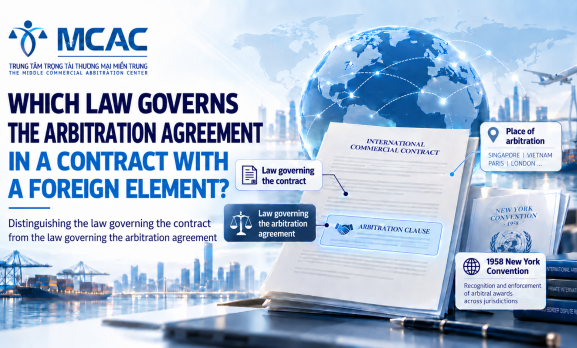
WHICH LAW GOVERNS AN ARBITRATION AGREEMENT IN A CONTRACT WITH FOREIGN ELEMENTS?
In international commercial transactions, parties often agree on the law governing their contract and on arbitration as the method of dispute resolution. However, does the law governing the contract automatically govern the arbitration agreement? If the parties have not agreed on the applicable law, which country's law is used to determine the validity of the arbitration agreement?
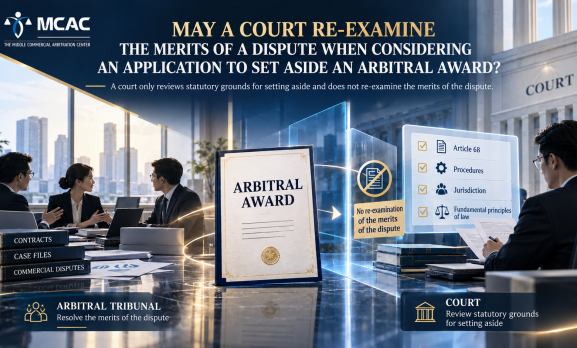
MAY A COURT RE-EXAMINE THE MERITS OF A DISPUTE WHEN CONSIDERING AN APPLICATION TO SET ASIDE AN ARBITRAL AWARD?
When considering an application to set aside an arbitral award, is the Court entitled to reassess evidence, reconsider the parties' rights and obligations, or alter the findings and decisions made by the Arbitral Tribunal?