Working hour: Monday – Friday/8AM – 5PM
|Email: contact@mcac.vn
|Hotline: (+84) 935 925 068 - 0236 3656799
| Language:


Điện thoại: (+84) 935 925 068
Language:

IN WHAT CASES ARE ARBITRATION FEES REFUNDED AND HOW IS THE REFUND HANDLED?
15/01/2026


Pursuant to Article 34 of the 2010 Law on Commercial Arbitration, arbitration fees are charges collected for the provision of dispute resolution services by arbitration. Arbitration fees include: (i) arbitrators’ remuneration, travel expenses, and other expenses for arbitrators; (ii) fees for expert consultation and other assistance at the request of the Arbitral Tribunal; (iii) administrative fees; (iv) fees for appointing ad hoc arbitrators by an arbitration center at the request of the disputing parties; and (v) fees for the use of other ancillary services provided by the arbitration center. Arbitration fees are determined by the arbitration center. Where a dispute is resolved by ad hoc arbitration, arbitration fees are determined by the Arbitral Tribunal.
Article 34 of the MCAC Arbitration Rules provides that arbitration fees include: (i) Costs for paying remuneration to arbitrators resolving the dispute; (ii) The Center’s administrative costs related to the resolution of the dispute; (iii) Travel, accommodation, and other related expenses of arbitrators resolving the dispute as prescribed in the Center’s guidance in effect at the time of cost estimation; costs for other assistance at the request of the Arbitral Tribunal; and (iv) costs of expert examination, asset valuation, expert consultation, and other assistance at the request of the Arbitral Tribunal.

When the claim no longer exists or grounds for suspension arise under the law, arbitral proceedings must be terminated. This gives rise to the following legal issue: “In which cases are arbitration fees refunded, and how is the refund handled?”
1. Withdrawal of the Statement of Claim; amendment or supplementation of the Statement of Claim; withdrawal of the Counterclaim; amendment or supplementation of the Counterclaim
Pursuant to Article 37 of the 2010 Law on Commercial Arbitration (“LCA”): “Before the Arbitral Tribunal renders an arbitral award, the parties have the right to withdraw the statement of claim or the counterclaim”. In this case, the claimant must bear a portion of the arbitration fees and arbitrators’ costs depending on the procedural stage; the allocation of arbitration fees is considered in proportion to the stage of the proceedings. At MCAC, the handling of such arbitration fees is based on the time at which the parties withdraw their claims, specifically:
- First, where the withdrawal is made before the Arbitral Tribunal is constituted, pursuant to Section II of the MCAC Schedule of Arbitration Fees effective from July 21, 2021 (“MCAC Fee Schedule”), the Center refunds 70% of the arbitration fees.
- Second, where the withdrawal is made after the Arbitral Tribunal has been constituted but before the dispute resolution hearing, at this stage the Arbitral Tribunal has been appointed and may have carried out certain initial procedural activities; therefore, actual procedural costs have been incurred. Pursuant to Section II of the MCAC Fee Schedule: “If the Statement of Claim; amendments or supplements to the Statement of Claim; the Counterclaim; or amendments or supplements to the Counterclaim are withdrawn after the Arbitral Tribunal has been constituted, the Center refunds 40% of the arbitration fees”.
- Third, where the withdrawal is made after the Center has issued the notice convening the dispute resolution hearing and before the date of the hearing, pursuant to Section II of the MCAC Fee Schedule, the Center refunds 20% of the arbitration fees.
.png)
2. The Arbitral Tribunal issues a Decision to terminate the dispute resolution due to the non-existence, invalidity, or non-enforceability of the arbitration agreement
Clause 1 Article 43 of the LCA provides that the Arbitral Tribunal shall terminate the dispute resolution if “there is no arbitration agreement, the arbitration agreement is invalid, or the arbitration agreement is incapable of being performed.” Pursuant to Section II of the MCAC Fee Schedule: “Where the Arbitral Tribunal issues a Decision to terminate the dispute resolution due to the non-existence, invalidity, or non-enforceability of the arbitration agreement, the Center refunds 30% of the arbitration fees.”
3. The Arbitral Tribunal issues a Decision to terminate the dispute resolution upon a court decision holding that the dispute does not fall within the jurisdiction of arbitration
Clause 1 Article 18 of the Law on Commercial Arbitration provides that if a dispute arises in fields not within the jurisdiction of arbitration, the arbitration agreement is invalid; in such case, the Arbitral Tribunal may issue a decision to terminate the dispute resolution immediately upon receipt of the case.
Pursuant to Section II of the MCAC Fee Schedule: “Where the Arbitral Tribunal issues a Decision to terminate the dispute resolution upon a court decision holding that the dispute does not fall within the jurisdiction of arbitration, the Center refunds 20% of the arbitration fees.”
Conclusion:
From the above provisions, it can be seen that the law on commercial arbitration and the MCAC Arbitration Rules have established a clear and appropriate mechanism for handling the refund of arbitration fees at each procedural stage. Whether arbitration fees are refunded, and to what extent, is determined based on the degree of procedural activities that have been carried out, ensuring a proportional relationship between the costs incurred and the rights and obligations of the parties in the dispute resolution process.
The article above has provided a detailed analysis of the question: "In which cases are arbitration fees refunded and how is the refund settled?".For further information or legal assistance, please contact the MCAC Secretariat:
- Hotline: 0935 925 068
- Email: contact@mcac.vn
- See more: Correction, interpretation, and supplementation of arbitral awards: applicable circumstances?
Related news
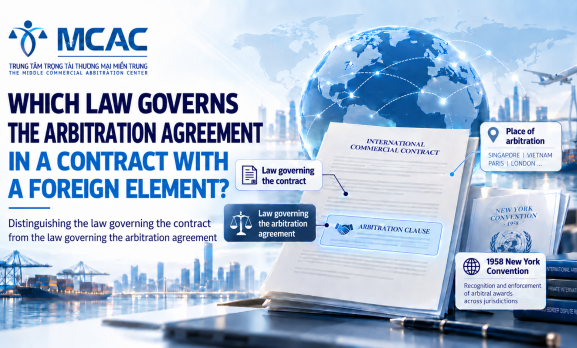
WHICH LAW GOVERNS AN ARBITRATION AGREEMENT IN A CONTRACT WITH FOREIGN ELEMENTS?
In international commercial transactions, parties often agree on the law governing their contract and on arbitration as the method of dispute resolution. However, does the law governing the contract automatically govern the arbitration agreement? If the parties have not agreed on the applicable law, which country's law is used to determine the validity of the arbitration agreement?
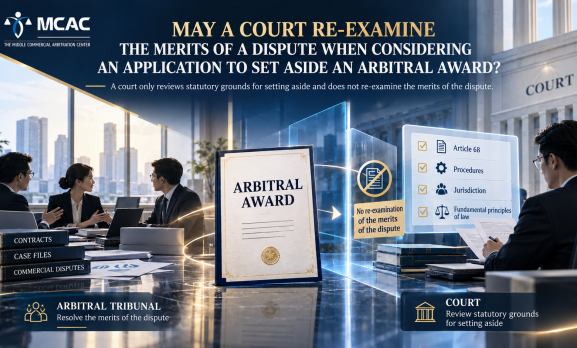
MAY A COURT RE-EXAMINE THE MERITS OF A DISPUTE WHEN CONSIDERING AN APPLICATION TO SET ASIDE AN ARBITRAL AWARD?
When considering an application to set aside an arbitral award, is the Court entitled to reassess evidence, reconsider the parties' rights and obligations, or alter the findings and decisions made by the Arbitral Tribunal?