Working hour: Monday – Friday/8AM – 5PM
|Email: contact@mcac.vn
|Hotline: (+84) 935 925 068 - 0236 3656799
| Language:



Điện thoại: (+84) 935 925 068
Language:

WHAT CONDITIONS MUST BE SATISFIED TO CONSOLIDATE MULTIPLE DISPUTES INTO A SINGLE ARBITRATION PROCEEDING?
31/07/2026


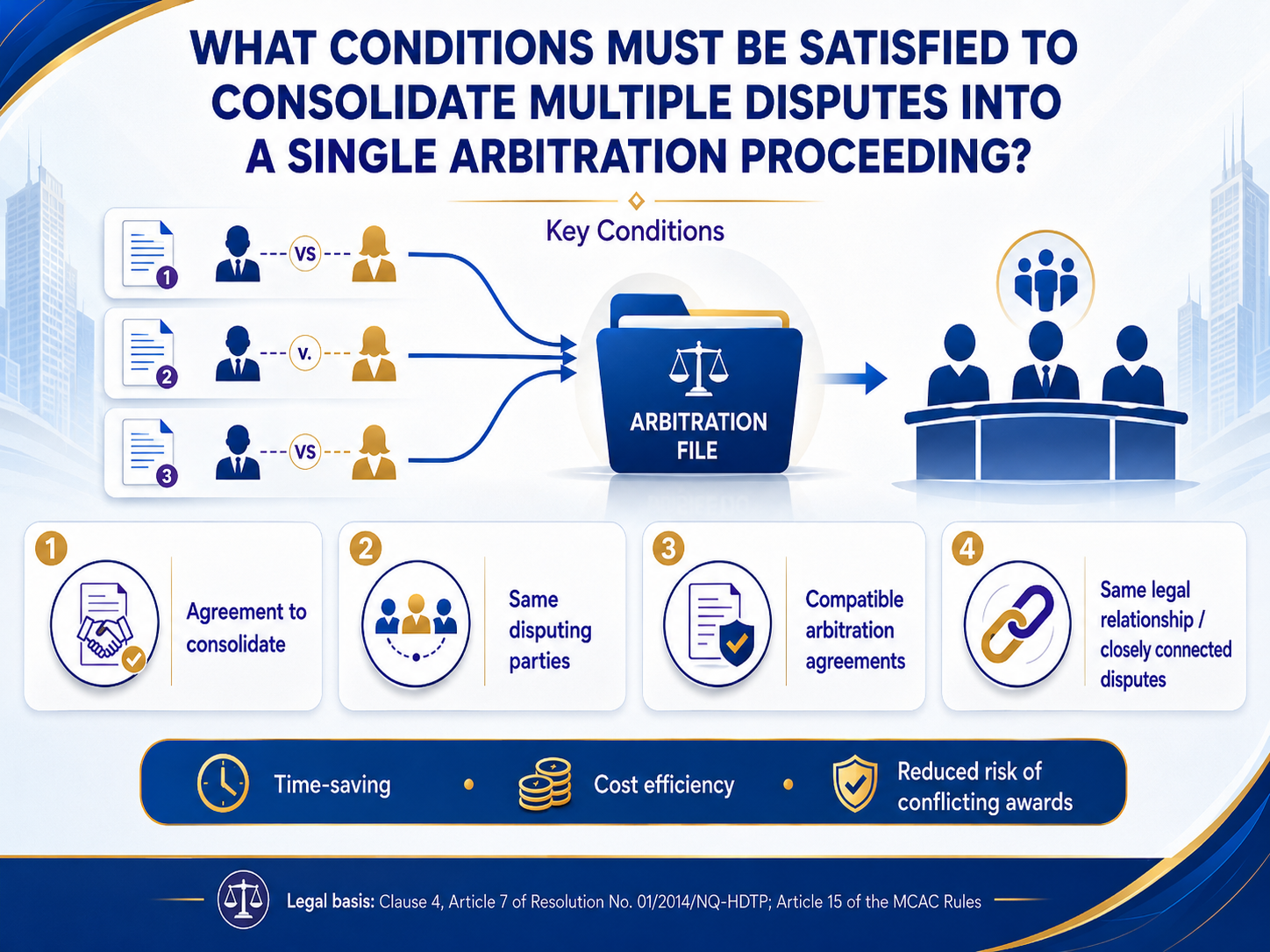
In commercial arbitration, the consolidation of multiple disputes arising from different legal relationships into a single arbitral proceeding is an important procedural mechanism designed to optimize costs and time while minimizing the risk of inconsistent arbitral awards.
1. What Is the Consolidation of Multiple Disputes?
The consolidation of multiple disputes refers to the process whereby two or more separate arbitral proceedings are combined and resolved within a single arbitration, either before the same Arbitral Tribunal or a newly constituted tribunal. The primary objectives of this mechanism are to avoid duplicative proceedings, reduce procedural costs, expedite dispute resolution, and prevent the issuance of conflicting arbitral awards.
Consolidation is a well-established mechanism under the arbitration rules of leading arbitral institutions, such as the International Chamber of Commerce (ICC) and the Singapore International Arbitration Centre (SIAC). However, Vietnamese arbitration law has not yet recognized consolidation as an independent legal institution under the Law on Commercial Arbitration 2010.
Nevertheless, the concept is indirectly acknowledged in Resolution No. 01/2014/NQ-HĐTP of the Council of Judges of the Supreme People's Court. Pursuant to Clause 4, Article 7 of the Resolution, multiple legal relationships in dispute may be consolidated and resolved in a single proceeding where either of the following circumstances exists:
- The parties mutually agree to consolidate multiple legal relationships in dispute into a single proceeding; or
- The applicable arbitration rules permit the consolidation of multiple legal relationships into one proceeding.
This provision demonstrates that Vietnamese arbitration law has implicitly recognized the consolidation mechanism while emphasizing the principle of party autonomy, one of the fundamental principles governing arbitration proceedings. It also provides an important legal basis for arbitral institutions, including the MCAC, to implement and develop consolidation mechanisms in practice.
2. Under What Conditions May MCAC or an Arbitral Tribunal Order the Consolidation of Multiple Disputes?
Pursuant to Article 15 of the Arbitration Rules of MCAC, multiple disputes may be consolidated into a single arbitration where the parties have reached an agreement to that effect. Once such an agreement has been established, the Arbitral Tribunal will consider a number of relevant factors in determining whether consolidation is appropriate. In practice, the Tribunal typically evaluates the following considerations:
(i) The disputes involve the same claimant(s) and respondent(s)
The disputes should involve the same parties to ensure that consolidation does not create rights or obligations for third parties or extend beyond the scope of the arbitration agreement previously concluded by the parties.
(ii) The arbitration agreements are compatible
The arbitration agreements governing the disputes should be compatible with one another. In particular, provisions concerning the seat of arbitration, the composition or method of appointment of the Arbitral Tribunal, the language of the arbitration, the governing law applicable to the dispute, and other essential procedural matters should either be identical or, at a minimum, not conflict with one another. This requirement ensures that consolidation does not undermine or alter the parties' agreed dispute resolution mechanism.
(iii) The disputes arise from the same legal relationship or are closely connected
The disputes should arise out of the same legal relationship or otherwise possess a close factual and legal connection. For example, they may originate from the same contractual relationship involving the sale of goods, the provision of services, or other interconnected commercial transactions. Where disputes are closely related, consolidation enables the Arbitral Tribunal to resolve all issues more efficiently, reduce procedural costs and time, and minimize the risk of inconsistent or contradictory arbitral awards.
3. Conclusion
The consolidation of multiple disputes into a single arbitral proceeding requires a careful balance between procedural efficiency and the fundamental principle of party autonomy. To maximize the likelihood that a request for consolidation will be accepted, parties should carefully review the compatibility of their arbitration agreements at the contract drafting stage, particularly where multiple framework agreements or related contracts are involved. Alternatively, where disputes have already arisen, the parties may negotiate and enter into a separate agreement to consolidate the proceedings. Properly satisfying these requirements not only facilitates a more efficient and cost-effective dispute resolution process but also significantly reduces the likelihood of inconsistent arbitral awards, thereby enhancing both the effectiveness and consistency of arbitration as a dispute resolution mechanism.
The article above has analyzed in detail is "WHAT CONDITIONS MUST BE SATISFIED TO CONSOLIDATE MULTIPLE DISPUTES INTO A SINGLE ARBITRATION PROCEEDING?". For more detailed information or legal assistance, please contact the MCAC Secretariat:
- Hotline: 0935 925 068 - 0236 3656799
- Email: contact@mcac.vn
- Read more: CONFIDENTIALITY - A DISTINCTIVE ADVANTAGE OF ARBITRAL PROCEEDINGS
Related news
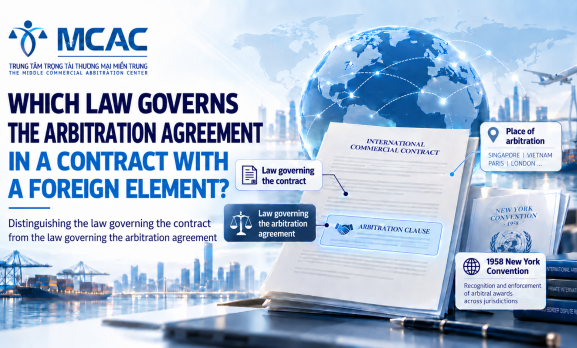
WHICH LAW GOVERNS AN ARBITRATION AGREEMENT IN A CONTRACT WITH FOREIGN ELEMENTS?
In international commercial transactions, parties often agree on the law governing their contract and on arbitration as the method of dispute resolution. However, does the law governing the contract automatically govern the arbitration agreement? If the parties have not agreed on the applicable law, which country's law is used to determine the validity of the arbitration agreement?
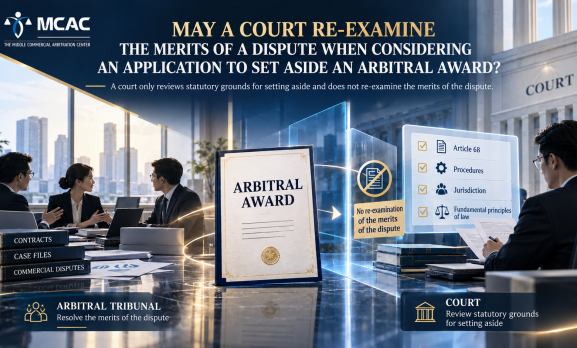
MAY A COURT RE-EXAMINE THE MERITS OF A DISPUTE WHEN CONSIDERING AN APPLICATION TO SET ASIDE AN ARBITRAL AWARD?
When considering an application to set aside an arbitral award, is the Court entitled to reassess evidence, reconsider the parties' rights and obligations, or alter the findings and decisions made by the Arbitral Tribunal?