Working hour: Monday – Friday/8AM – 5PM
|Email: contact@mcac.vn
|Hotline: (+84) 935 925 068 - 0236 3656799
| Language:


Điện thoại: (+84) 935 925 068
Language:

WHEN PARTIES REACH A SETTLEMENT THROUGH MEDIATION DURING ARBITRAL PROCEEDINGS: WHAT IS THE LEGAL EFFECT OF THE SETTLEMENT?
26/10/2026


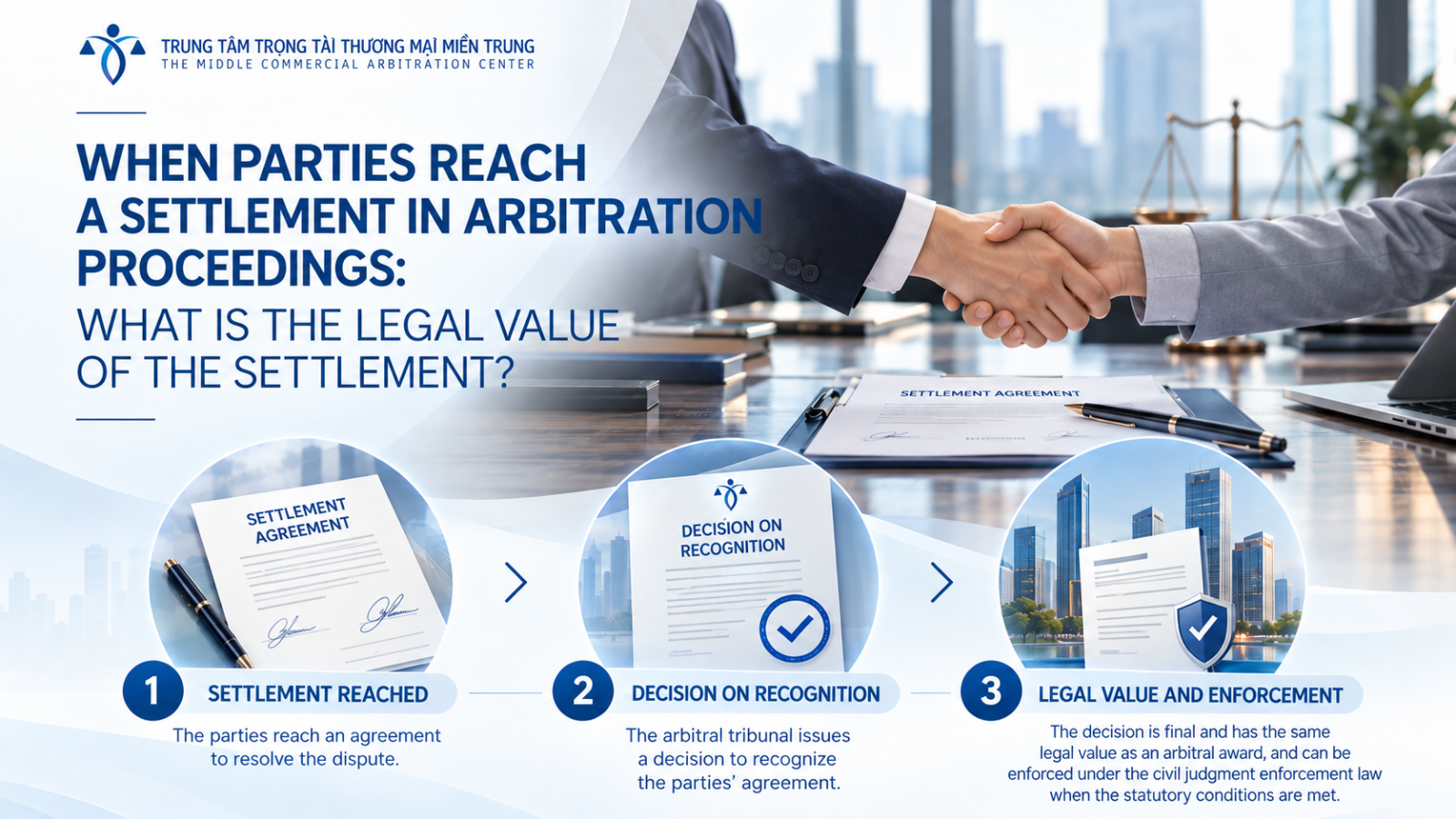
When parties reach a settlement through mediation during arbitral proceedings and the Arbitral Tribunal issues a decision recognizing their agreement, such decision is final, has the same legal effect as an arbitral award, and is enforceable in accordance with the law on civil judgment enforcement, provided that the statutory requirements are satisfied.
In the course of resolving disputes through commercial arbitration, parties are not required to wait for the Arbitral Tribunal to issue an arbitral award before bringing the dispute to an end. Instead, they may proactively engage in negotiations and mediation to reach a solution that best serves their respective interests.
The question arises: Where the parties successfully settle their dispute through mediation, what is the legal effect of the decision recognizing their agreement, and is such decision enforceable under the law on civil judgment enforcement?
1. The Parties’ Right to Negotiate and Mediate During Arbitral Proceedings
Pursuant to Article 9 of the Law on Commercial Arbitration (LCA), during arbitral proceedings, parties are entitled to freely negotiate and reach an agreement on the resolution of their dispute or request the Arbitral Tribunal to conduct mediation to facilitate a mutually agreed settlement. Article 38 of the LCA further provides that, from the commencement of arbitral proceedings, parties retain the right to negotiate and agree among themselves to terminate the dispute resolution process.
Article 58 of the LCA provides: “At the request of the parties, the Arbitral Tribunal shall conduct mediation to enable the parties to reach an agreement on the resolution of their dispute.”
Accordingly, the Arbitral Tribunal conducts mediation at the request of the parties pursuant to Article 58 of the LCA, while respecting the parties’ agreement in accordance with Article 4.1 of the LCA. Once the parties have agreed on a settlement, they must comply with the procedures prescribed in Article 58 of the LCA for the settlement to be formally recognized by the Arbitral Tribunal.
2. Legal Effect of a Successful Mediation Settlement
Under Article 58 of the LCA, where the parties reach an agreement on the resolution of their dispute, the Arbitral Tribunal shall prepare a record of successful mediation, signed by the parties and certified by the arbitrators, and subsequently issue a decision recognizing the parties’ agreement. The provision expressly states: “This decision shall be final and have the same legal effect as an arbitral award.”
Based on the above provisions, the following points can be established:
First, a decision recognizing the parties’ agreement has the same legal effect as an arbitral award.
Article 14.1 of Resolution No. 01/2014/NQ-HDTP dated March 20, 2014, issued by the Council of Judges of the Supreme People’s Court, clarifies that arbitral awards referred to in Article 3.10 and Article 68 of the LCA include both decisions recognizing the parties’ agreement under Article 58 and arbitral awards issued under Article 61 of the LCA. Accordingly, a decision recognizing the parties’ agreement is subject to the legal framework applicable to arbitral awards, notwithstanding that its substance derives from the parties’ mutual agreement.
Second, a decision recognizing the parties’ agreement is final and takes effect from the date of its issuance.
Article 58 of the LCA establishes the finality of such a decision. Since the decision has the same legal effect as an arbitral award, its effectiveness from the date of issuance is determined in accordance with Article 61.5 of the LCA.
Third, a distinction must be made between the record of successful mediation and the decision recognizing the parties’ agreement.
Under Article 58 of the LCA, the record of successful mediation is a document recording the parties’ agreement on the resolution of their dispute, bearing the signatures of the parties and the certification of the arbitrators. Based on the successful mediation settlement, the Arbitral Tribunal subsequently issues a decision recognizing the parties’ agreement.
Such decision is final, has the same legal effect as an arbitral award, and is enforceable under the law on civil judgment enforcement, provided that the statutory requirements are satisfied. Therefore, the record of successful mediation cannot substitute for the decision recognizing the parties’ agreement as the legal basis for requesting enforcement under the mechanism applicable to arbitral awards.
3. Is a Decision Recognizing the Parties’ Agreement Enforceable?
Pursuant to Articles 65 and 67 of the LCA, the State encourages parties to voluntarily comply with arbitral awards, and their enforcement shall be carried out in accordance with the law on civil judgment enforcement.
Article 2.3 of the 2025 Law on Civil Judgment Enforcement (Law No. 106/2025/QH15) provides that arbitral awards issued under the LCA are subject to enforcement. This Law takes effect on July 1, 2026, pursuant to Article 115.1.
Under Article 58 of the LCA, a decision recognizing the parties’ agreement has the same legal effect as an arbitral award. Therefore, pursuant to Article 32.1(h) of the 2025 Law on Civil Judgment Enforcement, the competent authority for enforcing arbitral awards is the provincial-level civil judgment enforcement agency.
Article 66.1 of the LCA provides that, upon the expiry of the enforcement period, if the party obligated to comply fails to voluntarily perform its obligations and does not file a request for setting aside the arbitral award under Article 69 of the LCA, the party entitled to enforcement may request the competent civil judgment enforcement agency to organize enforcement.
Where a request for setting aside has been filed and the Court decides not to set aside the arbitral award, the decision recognizing the parties’ agreement shall be enforced in accordance with Article 71.8 of the LCA.
Accordingly, where an obligated party fails to comply with an agreement that has been formally recognized by the Arbitral Tribunal, the other party is not required to initiate new legal proceedings to seek a fresh determination of the obligations already recognized.
4. Conclusion
Pursuant to Article 58 of the LCA, a decision recognizing the parties’ agreement issued by the Arbitral Tribunal is final and has the same legal effect as an arbitral award. It is enforceable under the law on civil judgment enforcement, provided that the statutory requirements are satisfied.
Therefore, the legal effect of a successful mediation settlement during arbitral proceedings lies not merely in the record of successful mediation or the parties’ agreement itself, but in the decision recognizing that agreement issued by the Arbitral Tribunal in accordance with Article 58 of the LCA.
Once such decision is issued, the parties’ agreement is no longer merely a civil undertaking but falls within the legal framework governing arbitral awards. Upon the expiry of the period for performing the relevant obligations, if the obligated party fails to voluntarily comply and does not file a request for setting aside, the party entitled to enforcement may request the competent civil judgment enforcement agency to organize enforcement pursuant to Article 66.1 of the LCA.
The article above has analyzed in detail is "WHEN PARTIES REACH A SETTLEMENT THROUGH MEDIATION DURING ARBITRAL PROCEEDINGS: WHAT IS THE LEGAL EFFECT OF THE SETTLEMENT?". For more detailed information or legal assistance, please contact the MCAC Secretariat:
- Hotline: 0935 925 068 - 0236 3656799
- Email: contact@mcac.vn
- Read more:WHICH LAW GOVERNS AN ARBITRATION AGREEMENT IN A CONTRACT WITH FOREIGN ELEMENTS?
Related news
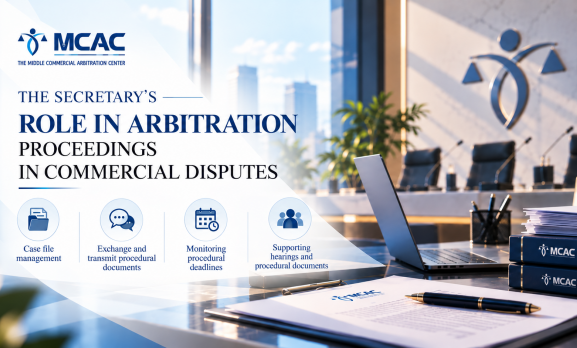
THE ROLE OF THE SECRETARY IN COMMERCIAL ARBITRATION PROCEEDINGS
Explore the role, duties, and authority of the Arbitral Secretary in commercial arbitration proceedings at MCAC, including case file management, hearing support, document review, and the principles of impartiality and confidentiality.
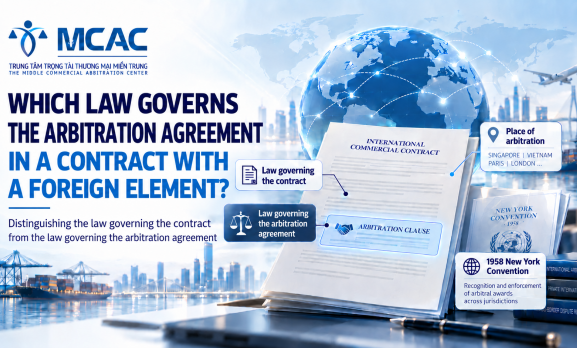
WHICH LAW GOVERNS AN ARBITRATION AGREEMENT IN A CONTRACT WITH FOREIGN ELEMENTS?
In international commercial transactions, parties often agree on the law governing their contract and on arbitration as the method of dispute resolution. However, does the law governing the contract automatically govern the arbitration agreement? If the parties have not agreed on the applicable law, which country's law is used to determine the validity of the arbitration agreement?