Working hour: Monday – Friday/8AM – 5PM
|Email: contact@mcac.vn
|Hotline: (+84) 935 925 068 - 0236 3656799
| Language:



Điện thoại: (+84) 935 925 068
Language:

PRE-ARBITRATION PROCEEDINGS: WHAT SHOULD BUSINESSES CONSIDER BEFORE COMMENCING ARBITRATION?
26/06/2026


Pursuant to Article 5.1 of the Law on Commercial Arbitration 2010 ("LCA"), disputes may only be resolved through arbitration where the parties have entered into a valid arbitration agreement. However, in practice, not all arbitration agreements are drafted in a complete and unambiguous manner.
Common situations include:
- The parties agree to resolve disputes by arbitration but fail to specify whether the arbitration will be institutional arbitration or ad hoc arbitration;
- The parties agree to arbitration but do not designate a specific arbitral institution;
- The parties simultaneously agree that disputes may be resolved by either the courts or arbitration.
In such cases, before a dispute can be submitted to arbitration, the parties may be required to complete certain procedural steps to clarify their arbitration agreement, determine the form of arbitration, or identify the competent arbitral institution in accordance with applicable law. This preparatory stage is commonly referred to as pre-arbitration proceedings, namely, the period before formal arbitral proceedings officially commence.
Under Article 31 of the LCA, where a dispute is resolved by an arbitral institution, arbitral proceedings commence on the date the arbitral institution receives the Statement of Claim from the claimant. Accordingly, all activities undertaken prior to that point in preparation for filing the claim and resolving the dispute may be regarded as falling within the pre-arbitration stage.
What should businesses consider before commencing arbitration?
Before filing a Statement of Claim, the parties should carefully review and prepare several important matters to ensure that the arbitration is commenced in compliance with the law while minimizing procedural risks that may arise during the arbitral process.
First, review the arbitration agreement
The arbitration agreement forms the legal basis upon which the Arbitral Tribunal exercises jurisdiction over the dispute. Therefore, before commencing arbitration, businesses should carefully examine the arbitration clause contained in the contract or any related agreements to determine:
- Whether a valid and enforceable arbitration agreement exists;
- Whether the dispute falls within the scope of the arbitration agreement;
- Whether the parties have clearly identified the form of arbitration or the competent arbitral institution.
If the arbitration agreement fails to specify the form of arbitration or the competent arbitral institution, the parties should complete the procedures prescribed under Article 43.5 of the LCA before initiating arbitration.
Second, determine the scope of the dispute and the relief sought
Prior to filing the Statement of Claim, the claimant should clearly identify:
- The nature and subject matter of the dispute;
- The specific relief sought and the value of the dispute;
- The legal and factual grounds supporting each claim;
- The name and address of the arbitrator selected by the claimant, or a request for the appointment of an arbitrator.
These matters also constitute the essential information required to be included in a Statement of Claim under Article 30 of the LCA and Article 7 of the Arbitration Rules of the Middle Commercial Arbitration Centre (MCAC).
Preparing these matters thoroughly during the pre-arbitration stage helps minimize the need for subsequent amendments or supplements to the Statement of Claim and facilitates a more efficient dispute resolution process.
Third, prepare the case file, documents, and evidence
Preparing a complete set of documents and evidence from the outset can significantly shorten the dispute resolution process and strengthen a party's ability to protect its lawful rights and interests.
Evidence serves as the basis upon which the Arbitral Tribunal examines the facts, evaluates the parties' positions, and renders its award. Under the LCA, the claimant bears the burden of producing documents and evidence in support of its claims. Accordingly, businesses should proactively collect and organize all relevant materials.
In a contractual dispute between commercial parties, a claimant should generally prepare the following documents before commencing arbitration:
- The arbitration agreement or documents evidencing the existence of an arbitration agreement;
- The contract and its appendices;
- Meeting minutes and acceptance or inspection records;
- Payment records and supporting documents;
- Emails and other communications exchanged between the parties;
- Documents evidencing losses and damages;
- Notices of breach or demands for performance of contractual obligations; and
- Other relevant supporting documents.
Conclusion
Although the LCA does not recognize pre-arbitration proceedings as an independent procedural stage, they play a crucial role in ensuring the effectiveness of the arbitration process. Reviewing the arbitration agreement, clearly identifying the claims, and preparing comprehensive documentation and evidence at an early stage not only reduce procedural risks but also save time and costs while improving the overall efficiency of dispute resolution.
Businesses should therefore regard the pre-arbitration stage as an essential preparatory step to ensure that arbitration proceedings are conducted smoothly, efficiently, and in full compliance with applicable law.
.png)
The article above has analyzed in detail is "PRE-ARBITRATION PROCEEDINGS: WHAT SHOULD BUSINESSES CONSIDER BEFORE COMMENCING ARBITRATION?". For more detailed information or legal assistance, please contact the MCAC Secretariat:
- Hotline: 0935 925 068 - 0236 3656799
- Email: contact@mcac.vn
- Read more:CHECKLIST FOR DRAFTING ARBITRATION CLAUSES: COMMON ISSUES TO NOTE
Related news
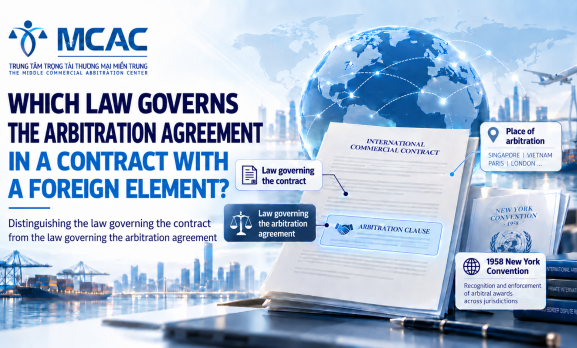
WHICH LAW GOVERNS AN ARBITRATION AGREEMENT IN A CONTRACT WITH FOREIGN ELEMENTS?
In international commercial transactions, parties often agree on the law governing their contract and on arbitration as the method of dispute resolution. However, does the law governing the contract automatically govern the arbitration agreement? If the parties have not agreed on the applicable law, which country's law is used to determine the validity of the arbitration agreement?
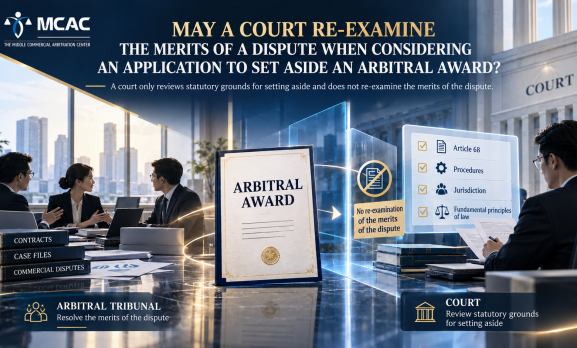
MAY A COURT RE-EXAMINE THE MERITS OF A DISPUTE WHEN CONSIDERING AN APPLICATION TO SET ASIDE AN ARBITRAL AWARD?
When considering an application to set aside an arbitral award, is the Court entitled to reassess evidence, reconsider the parties' rights and obligations, or alter the findings and decisions made by the Arbitral Tribunal?