Working hour: Monday – Friday/8AM – 5PM
|Email: contact@mcac.vn
|Hotline: (+84) 935 925 068 - 0236 3656799
| Language:



Điện thoại: (+84) 935 925 068
Language:

REQUIRED CONTENTS OF A STATEMENT OF CLAIM IN INSTITUTIONAL ARBITRATION
20/03/2026


In the course of resolving disputes through commercial arbitration, the Statement of Claim constitutes a fundamental document for the commencement of arbitral proceedings. The proper preparation of a Statement of Claim, in compliance with applicable requirements, not only enables the arbitral institution and the arbitral tribunal to determine whether to accept the case, but also contributes to ensuring that the proceedings are conducted in an efficient and orderly manner.
At present, the Law on Commercial Arbitration 2010 and the Rules of Arbitration of the Middle Commercial Arbitration Center (MCAC) set out the required contents of a Statement of Claim. In particular, Article 7(2) of the MCAC Rules provides that:
“2. The Request for Arbitration shall contain the following information:
a) Date, month, year on which the Request for Arbitration is made;
b) Names and addresses of the parties;
c) Summary of the content of the dispute;
d) Grounds for the claims;
e) The monetary value of the dispute and other claims of the Claimant;
f) The name of the person selected by the Claimant to act as Arbitrator or a request to the Centre to appoint an Arbitrator in accordance with clause 1 of Article 12 or Article 13 of these Arbitration Rules;
g) Signature of the legal representative or the authorized representative in case the Claimant is an organization; signature of the individual or the authorized representative in case the Claimant is an individual.”[1]
.png)
1. Date of the Statement of Claim
The Statement of Claim must clearly indicate the date on which it is made. This serves as the basis for determining the point in time at which the claimant formally initiates arbitration proceedings, and is relevant for assessing legal issues such as the limitation period as well as procedural timelines in the course of the arbitration.
2. Information of the Parties
The Statement of Claim must clearly specify the names and addresses of the parties to the dispute. In the case of legal entities, this includes the full corporate name, registered office address, and contact details; in the case of individuals, their full name and residential address must be provided.
The provision of accurate party information enables the arbitral institution to carry out procedural steps such as the service of notices and documents, as well as the organisation of hearings.
3. Summary of the Dispute
A key component of the Statement of Claim is a summary of the dispute. This section should provide an overview of the relationship between the parties, the contents of the contract or transaction, and the circumstances giving rise to the dispute.
A clear and coherent presentation of the dispute assists the arbitral tribunal in forming an initial understanding of the case, thereby facilitating the identification of the issues to be determined.
4. Grounds of the Claim
The claimant is required to set out the grounds of the claim, including both legal and factual bases. Such grounds may derive from contractual arrangements between the parties, transactional documents, or applicable provisions of law.
Clearly identifying the grounds of the claim helps to establish the legal basis of the dispute and enables the arbitral tribunal to assess the parties’ claims in an objective manner.
5. Value of the Dispute and Relief Sought
The Statement of Claim must specify the value of the dispute and the specific relief sought by the claimant. The value of the dispute is typically determined based on the monetary amount, the value of the obligation, or the value of the assets in dispute.
This determination is important as it serves as the basis for calculating arbitration fees and defining the scope of the dispute. In addition, the claimant should clearly state the relief sought, which may include payment obligations, damages, specific performance, or other remedies related to the resolution of the dispute.
6. Information on the Arbitrator
Under the applicable law on commercial arbitration, the claimant has the right to appoint an arbitrator or to request the arbitral institution to appoint one. Accordingly, the Statement of Claim should specify either:
- The name and contact details of the arbitrator appointed by the claimant; or
- A request for the arbitral institution to appoint an arbitrator.
This information serves as the basis for the arbitral institution to proceed with the constitution of The Arbitral Tribunal in accordance with the applicable law and arbitration rules.
7. Signature of the Claimant
The Statement of Claim must bear the signature of the claimant or its duly authorised representative. Specifically:
- Where the claimant is a legal entity, the Statement of Claim must be signed by its legal representative or an authorised representative;
- Where the claimant is an individual, it must be signed by the individual or their authorised representative.
8. Arbitration Agreement and Supporting Documents
The claimant must rely on a valid arbitration agreement as the basis for establishing the jurisdiction of arbitration. In addition, the Statement of Claim should be accompanied by relevant documents and evidence supporting the claim.
Such documents may include contracts, appendices, correspondence, minutes of meetings, payment records, or other materials relevant to the dispute.
9. Additional Procedural Considerations
In the course of the arbitral proceedings, the claimant may amend or supplement the Statement of Claim, the Statement of Defence, or any defence to a counterclaim, at any time prior to the closure of the final hearing. The claimant also retains the right to withdraw the Statement of Claim before the arbitral tribunal renders its award.
Furthermore, when submitting the case file to the MCAC, the parties are required to provide the prescribed number of copies:
- Five (5) sets of documents where the arbitral tribunal consists of three arbitrators;
- Three (3) sets of documents where the arbitral tribunal consists of a sole arbitrator.
Proper preparation of the required number of copies facilitates the efficient distribution of documents to the parties and members of the arbitral tribunal during the proceedings.
Conclusion
It may be observed that a Statement of Claim in arbitral proceedings must contain all required elements as prescribed by law. The proper and complete preparation of the Statement of Claim, together with the necessary supporting documents and evidence, not only enables the arbitral institution to accept and administer the case efficiently, but also contributes to ensuring that the arbitral proceedings are conducted in a timely and effective manner, thereby safeguarding the legitimate rights and interests of the parties in commercial activities.
The article above has analyzed in detail is "Required contents of a statement of claim in institutional arbitration". For more detailed information or legal assistance, please contact the MCAC Secretariat:
- Hotline: 0935 925 068 - 0236 3656799
- Email: contact@mcac.vn
- Read more: Notes on drafting an arbitration agreement clause to avoid invalidity
Related news
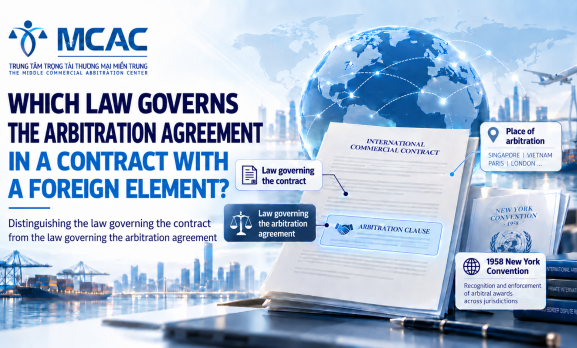
WHICH LAW GOVERNS AN ARBITRATION AGREEMENT IN A CONTRACT WITH FOREIGN ELEMENTS?
In international commercial transactions, parties often agree on the law governing their contract and on arbitration as the method of dispute resolution. However, does the law governing the contract automatically govern the arbitration agreement? If the parties have not agreed on the applicable law, which country's law is used to determine the validity of the arbitration agreement?
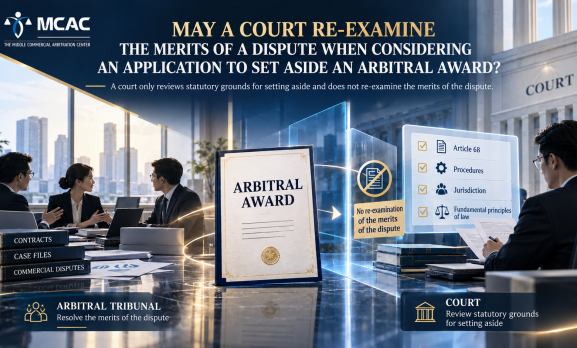
MAY A COURT RE-EXAMINE THE MERITS OF A DISPUTE WHEN CONSIDERING AN APPLICATION TO SET ASIDE AN ARBITRAL AWARD?
When considering an application to set aside an arbitral award, is the Court entitled to reassess evidence, reconsider the parties' rights and obligations, or alter the findings and decisions made by the Arbitral Tribunal?