Working hour: Monday – Friday/8AM – 5PM
|Email: contact@mcac.vn
|Hotline: (+84) 935 925 068 - 0236 3656799
| Language:



Điện thoại: (+84) 935 925 068
Language:

WHO CAN BECOME AN ARBITRATOR ARCCORDING VIETNAMESE LAW?
23/03/2026


In arbitration proceedings, an arbitrator is the individual who directly examines and resolves disputes between the parties. Under the provisions of the Law on Commercial Arbitration 2010, arbitrators perform their adjudicative function independently and, together with the Arbitral Tribunal, issue arbitral awards that are binding upon the disputing parties. In addition, arbitrators play a crucial role in ensuring fairness, transparency, and confidentiality throughout the proceedings, thereby fostering trust among businesses when choosing arbitration as a method of dispute resolution in commercial activities.
Vietnamese law prescribes certain standards for individuals selected as arbitrators. A key legal question arises: “What qualifications and professional experience must an individual meet to become an arbitrator under Vietnamese law?”
1. Legal basis for qualifications of arbitrators
Vietnamese law establishes fundamental criteria to ensure that individuals selected as arbitrators possess sufficient professional competence and practical experience to resolve disputes.
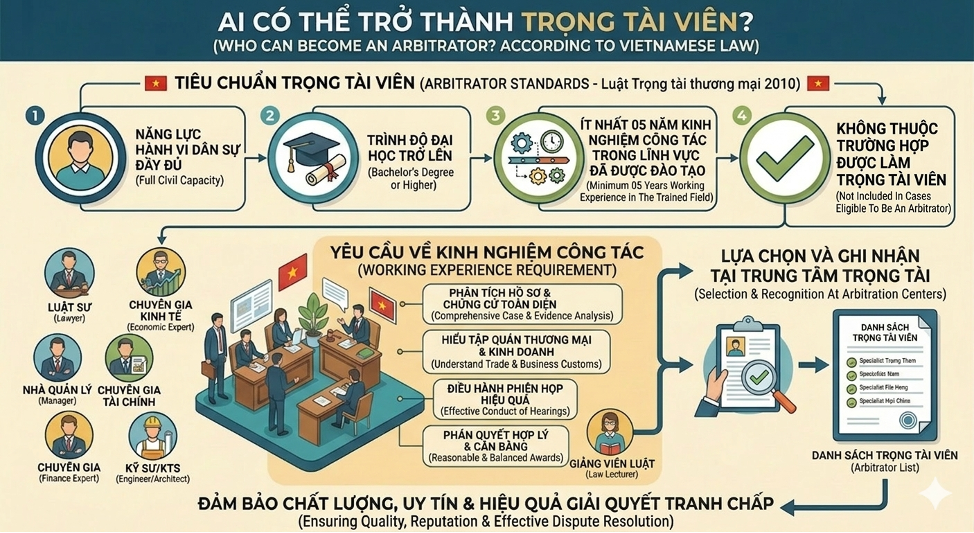
According to Article 20 of the Law on Commercial Arbitration 2010, an individual may be considered for appointment as an arbitrator if they meet the following basic conditions:
- Having full civil act capacity in accordance with the law;
- Holding a university degree or higher;
- Having at least five (05) years of work experience in the field in which they were trained. In special cases, highly qualified experts with extensive practical experience may still be selected as arbitrators even if they do not fully meet this requirement;
- Not falling into the cases prohibited from acting as arbitrators, including:
a) Persons currently serving as judges, procurators, investigators, enforcement officers, or civil servants working in the People’s Courts, People’s Procuracies, investigation agencies, or enforcement agencies; - b) Persons who are criminal suspects, defendants, or those serving criminal sentences, or who have completed their sentences but have not yet had their criminal records expunged.
These provisions reflect the legislator’s view that resolving commercial disputes requires not only theoretical knowledge but also practical experience in the relevant professional field in order to accurately assess the nature of disputes. Arbitration centers may impose higher standards than those mentioned above for their own arbitrators.
2. Requirements on professional experience of arbitrators
One of the key conditions for becoming an arbitrator is having at least five (05) years of work experience in the trained field. This requirement ensures that arbitrators possess not only academic knowledge but also practical understanding of business, commerce, or other relevant professional sectors related to the dispute.
In practice, arbitrators are often individuals with extensive experience in fields such as law, business and commerce, finance, construction, engineering, or other specialized areas where commercial disputes commonly arise. Many arbitrators are lawyers, legal experts, law lecturers, business managers, or financial and technical specialists with deep expertise in their respective fields.
The requirement of professional experience ensures that arbitrators are capable of analyzing the nature of disputes, evaluating evidence, and applying the law appropriately in each specific case.
An experienced arbitrator typically has the following advantages:
- The ability to comprehensively analyze case files, evidence, and legal arguments;
- A thorough understanding of commercial practices and business operations;
- Skills in conducting arbitral hearings and managing proceedings effectively;
- The capacity to render reasonable decisions that balance the interests of the disputing parties.
As a result, arbitration proceedings can maintain a high level of expertise, flexibility, and efficiency in resolving commercial disputes.
4. Selection and recognition of arbitrators at arbitration centers
In practice, commercial arbitration centers establish a Panel of Arbitrators comprising individuals who meet all required standards in terms of professional qualifications, work experience, and professional reputation under the Law on Commercial Arbitration 2010.
Before being included in such a panel, candidates typically undergo an application review and evaluation process assessing their expertise and practical experience. This appraisal ensures that selected individuals possess the necessary competence, experience, and professional integrity to resolve disputes.
The panel of arbitrators at each arbitration center usually includes experts from various fields such as law, commerce, finance, construction, engineering, and other specialized sectors. This diversity enables the Arbitral Tribunal to appoint arbitrators best suited to the nature of each specific dispute.
The strict establishment and management of arbitrator panels not only ensure the quality of dispute resolution but also enhance the credibility and professionalism of commercial arbitration in the business environment.
5. Conclusion
It can be seen that arbitrators play a pivotal role in the resolution of disputes through commercial arbitration. Accordingly, Vietnamese law sets out specific standards regarding professional qualifications, work experience, and ethical qualities for individuals selected as arbitrators under the Law on Commercial Arbitration 2010.
Requiring arbitrators to have practical experience in their professional field not only ensures their competence in resolving disputes but also contributes to enhancing the professionalism, objectivity, and effectiveness of arbitration proceedings. As a result, arbitration continues to affirm its role as a flexible, efficient, and suitable dispute resolution mechanism in the modern business environment.
The article above has analyzed in detail is "Who can become an arbitrator arccording vietnamese law?". For more detailed information or legal assistance, please contact the MCAC Secretariat:
- Hotline: 0935 925 068 - 0236 3656799
- Email: contact@mcac.vn
- Read more: Notes on drafting an arbitration agreement clause to avoid invalidity
Related news
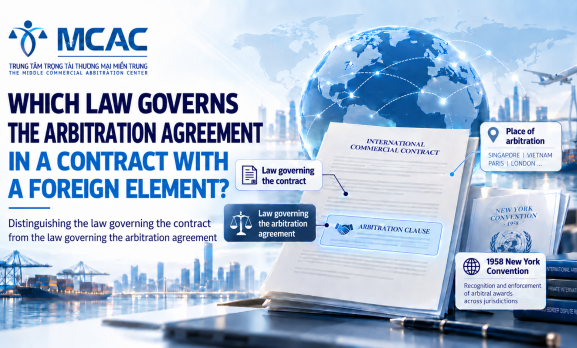
WHICH LAW GOVERNS AN ARBITRATION AGREEMENT IN A CONTRACT WITH FOREIGN ELEMENTS?
In international commercial transactions, parties often agree on the law governing their contract and on arbitration as the method of dispute resolution. However, does the law governing the contract automatically govern the arbitration agreement? If the parties have not agreed on the applicable law, which country's law is used to determine the validity of the arbitration agreement?
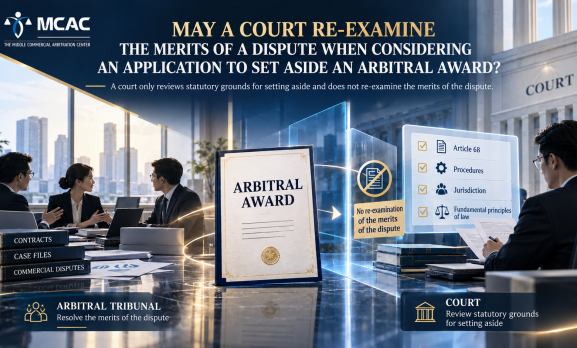
MAY A COURT RE-EXAMINE THE MERITS OF A DISPUTE WHEN CONSIDERING AN APPLICATION TO SET ASIDE AN ARBITRAL AWARD?
When considering an application to set aside an arbitral award, is the Court entitled to reassess evidence, reconsider the parties' rights and obligations, or alter the findings and decisions made by the Arbitral Tribunal?